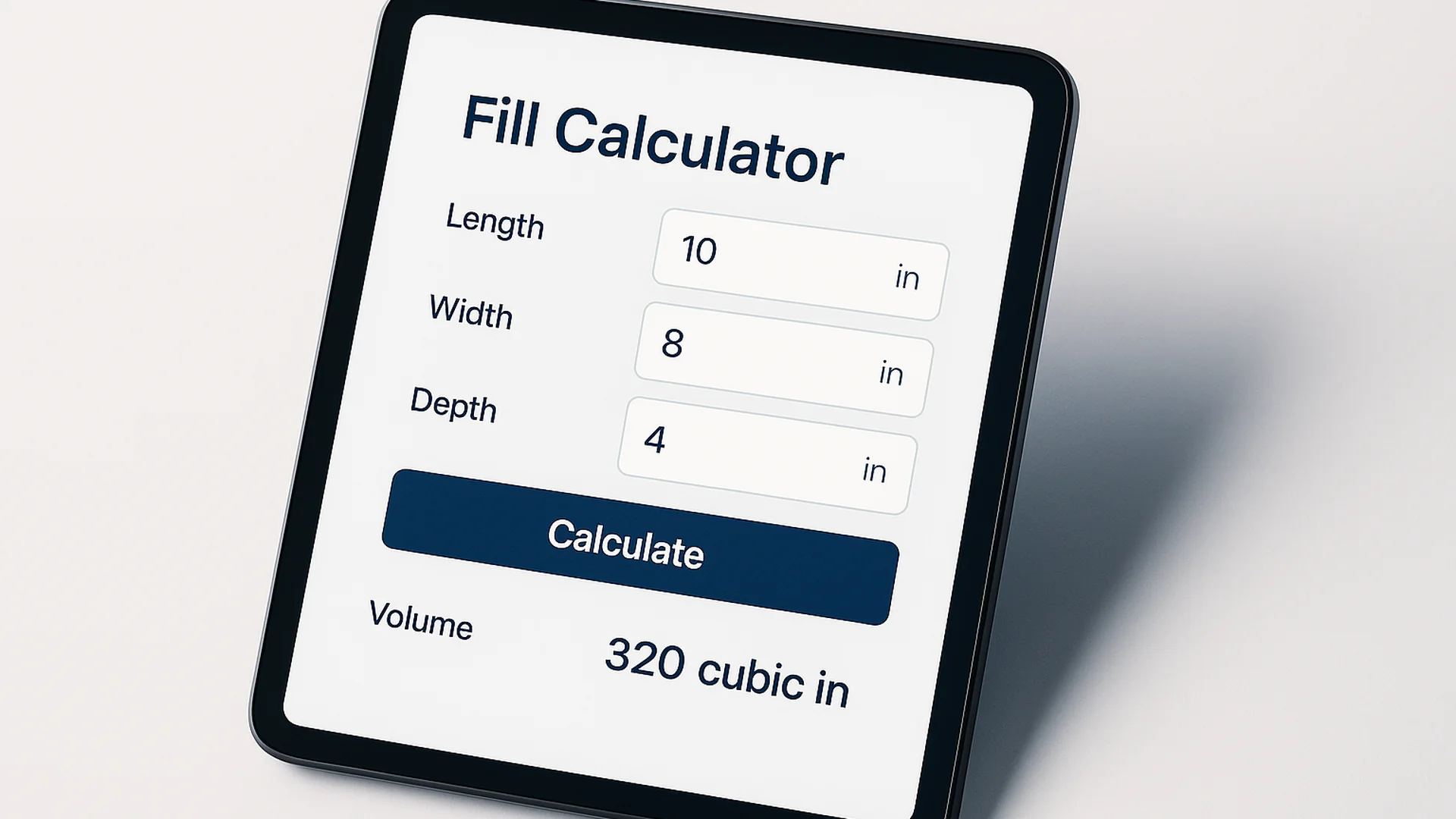
Work out how much fill dirt, granular, or backfill to order. Converts the compacted depth you need into the loose volume that shows up on the truck, so the load lands at grade instead of short. Use the Excavation Calculator if you are removing material from a dig site.
How this is calculated
Volume is length × width × depth, with wastage and a compaction factor stacked on top.
cubic_feet = length × width × depth × (1 + wastage%) × (1 + compaction%)cubic_yards = cubic_feet ÷ 27Aggregate suppliers price by the cubic yard or by the ton; ask which.
Soil expands when excavated and shrinks when compacted, so set the compaction factor to match the haul or fill condition.
How is fill priced, cubic yards or tons?
Both, depending on the supplier and material. Granular A is often priced per ton, topsoil per cubic yard. Always ask before ordering, and confirm whether delivery is included.
When should I use the compaction factor?
When you're bringing in fill that will be compacted in place. A positive compaction factor (e.g., +20%) means you need to order more loose material to end up with the target compacted volume.
Can I use this for crushed stone, gravel, or sand?
Yes. The volume math is identical. Use the supplier's recommended compaction factor for that material; gravel typically settles 10–15%, sand a bit less.
How much fill dirt do I need?
Measure the area you are raising and the depth you want after compaction, then order enough loose material to land there. A 30 ft by 20 ft area raised 6 inches is 11.1 cubic yards compacted, and granular takes about a quarter more loose material than that, so the order is closer to 14 cubic yards. Screened fill dirt varies more than granular, so confirm the factor with your supplier.
Is this a cut and fill calculator?
No. This works out material you are bringing in. Cut and fill balances what you dig out against what you place, which is a different job; use the Excavation Calculator for the dig side and compare the two numbers yourself. It also has nothing to do with fill rate or fill factor, which are unrelated measurements that happen to share the word.
What does fill dirt cost per cubic yard?
That depends on the material and how far it has to travel, so ask the pit for a delivered price rather than a pickup one. Put their number in the price field and the calculator applies it to the loose volume you are actually ordering, not the compacted volume you measured, which is the difference people miss when they budget.
Ordering fill dirt so it hits grade after compaction
Order fill dirt by the finished grade and you will come up short, because loose material off the truck loses volume the moment you tamp it. If you are backfilling a trench, raising a low spot or building up a pad, order by loose volume, not the grade you want to end on.
A worked example
Say you are bringing a 30 ft by 20 ft low area up 6 inches, compacted. That is 600 square feet times 0.5 of a foot, or 300 cubic feet, which is 11.1 cubic yards of finished, packed fill. Granular material compacts down roughly a fifth to a quarter, so order about 25 percent more loose to land there: 11.1 times 1.25 is close to 14 cubic yards on the order.
Common mistakes
- Ordering the compacted number. A load that measures right in the box comes up short once you run a plate over it, because loose granular settles.
- Guessing at the unit. Some pits sell by the yard and some by the ton, and weight per yard changes with the material, so ask which before you price it.
- Dumping deep fill in one lift. A thick layer placed all at once never compacts through the middle. Build it up in shorter layers and pack each one.
Everything here runs in your browser, and nothing you enter is sent anywhere or stored.
Ordering fill is all volume math nobody enjoys. This is a working sample of the custom tools I drop into trades sites so your visitors never do that math by hand. Book a discovery call
On the same job you may also need excavation volume or asphalt tonnage. Every calculator here is free and runs in your browser.
Leave a reply