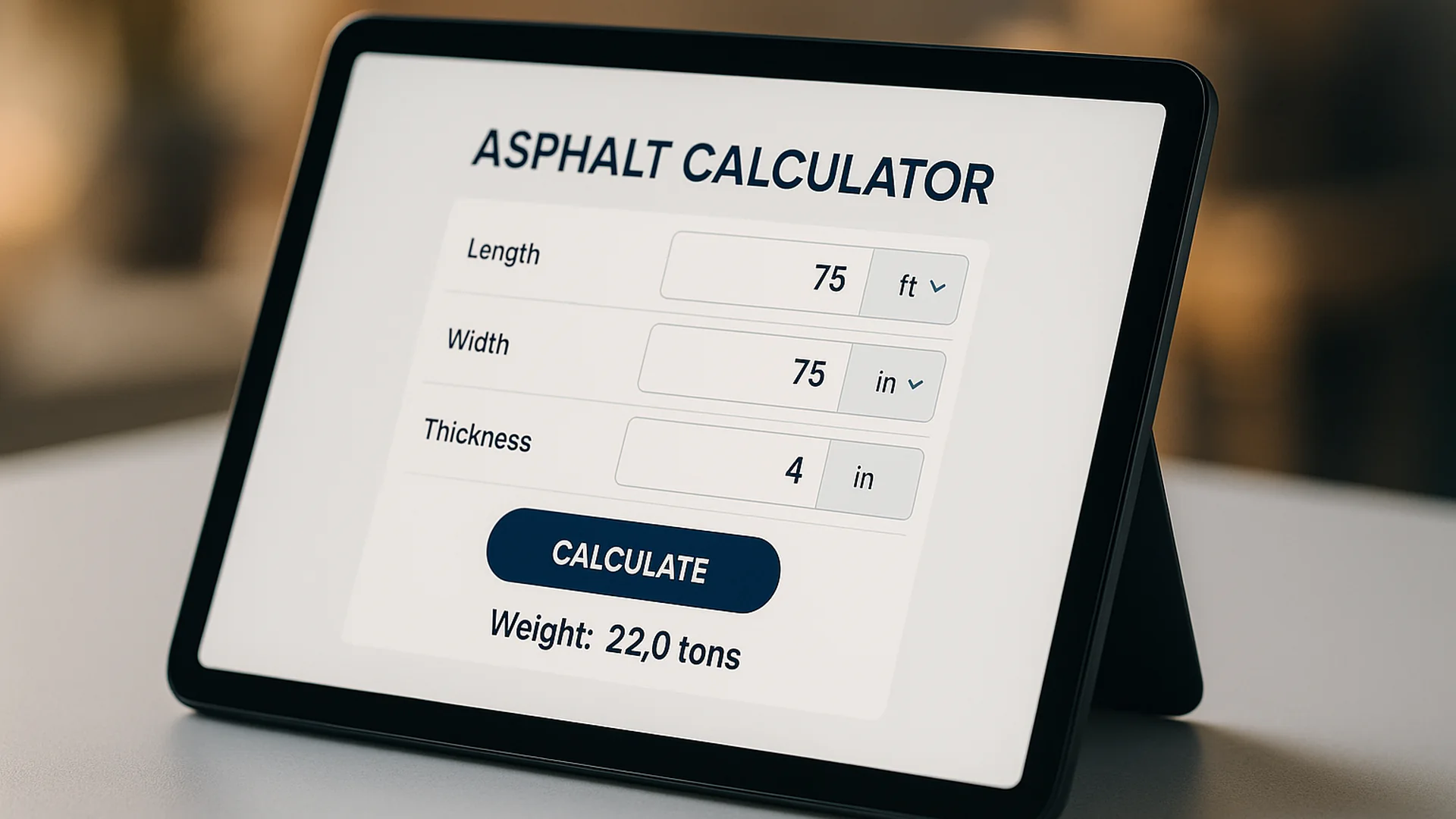
Estimate asphalt volume, tonnage, and optional cost with unit conversions, wastage, density, and compaction controls.
How this is calculated
Compacted volume × mix density gives tonnage; most paving is sold by the ton.
cubic_feet = length × width × thickness × (1 + wastage%) × (1 + compaction%)tons = (cubic_feet × density_lb_per_ft3) ÷ 2000cubic_yards = cubic_feet ÷ 27Hot-mix asphalt ≈ 145 lb/ft³ is the safe default. Stone-mastic mixes run heavier (≈ 150); cold-mix runs lighter (≈ 140).
Driveways are usually 2–3″ compacted. Heavy-traffic surfaces want 4″+ over a properly compacted base.
How thick should my asphalt be?
Residential driveways: 2–3″ of compacted hot-mix over a properly prepared 6–8″ granular base. Commercial parking and any surface that'll see truck traffic: 4″+ asphalt over 8–12″ base, sometimes with a binder course.
Why does the calculator ask for density?
Asphalt is sold by the ton, but you measure your job in volume. Density (mass per unit volume) is the conversion factor. 145 lb/ft³ is the safe default for standard hot-mix; specialty mixes vary.
Should I set a compaction factor?
Default flow: enter the finished, compacted thickness (the depth you actually want after rolling) and leave the compaction factor at 0%. The 145 lb/ft³ density figure already represents compacted hot-mix, so the tonnage math comes out right. Escape hatch: if your supplier quotes loose tonnage instead of compacted, set the compaction factor to about 25%. Loose asphalt compacts roughly 20–25% during rolling, so a 25% bump on the volume side closes the gap.
How much hot-mix to order for a driveway
If you are pricing a driveway or checking a paver’s takeoff before you sign, the number you need is tons, because that is the only unit the plant sells in. Get the depth and the density right and you will know within a fraction of a ton what should show up on the truck.
A worked example
Say you are paving a 20 ft by 24 ft driveway at 3 inches of compacted hot-mix. That is 480 square feet, and 3 inches is 0.25 of a foot, so you are laying 120 cubic feet of asphalt. Hot-mix runs about 145 pounds per cubic foot, so 120 times 145 gives you 17,400 pounds. Divide by 2,000 and you land at 8.7 tons. I would order a little over that, closer to 9, because the edges and any low spots drink more than the math says.
Common mistakes
- Entering the loose spread depth instead of the compacted depth. Hot-mix packs down roughly a fifth under the roller, so if you want 3 inches finished you spread more than 3 loose. The 145-pound density is for compacted material, so measure to the finished thickness.
- Ordering the exact figure. Asphalt cools fast and you cannot send the truck back for one more wheelbarrow, so a small cushion beats coming up short mid-pour.
- Forgetting the plant minimum. A short driveway may not fill a minimum load, and you pay for that whether you use it or not.
Everything here runs in your browser, and nothing you enter is sent anywhere or stored.
You came to price a driveway. This estimator is a live example of a custom tool I can build into a paving contractor’s site, so a visitor gets a real number instead of waiting on a callback. Book a discovery call
On the same job you may also need excavation volume or fill volume. Every calculator here is free and runs in your browser.