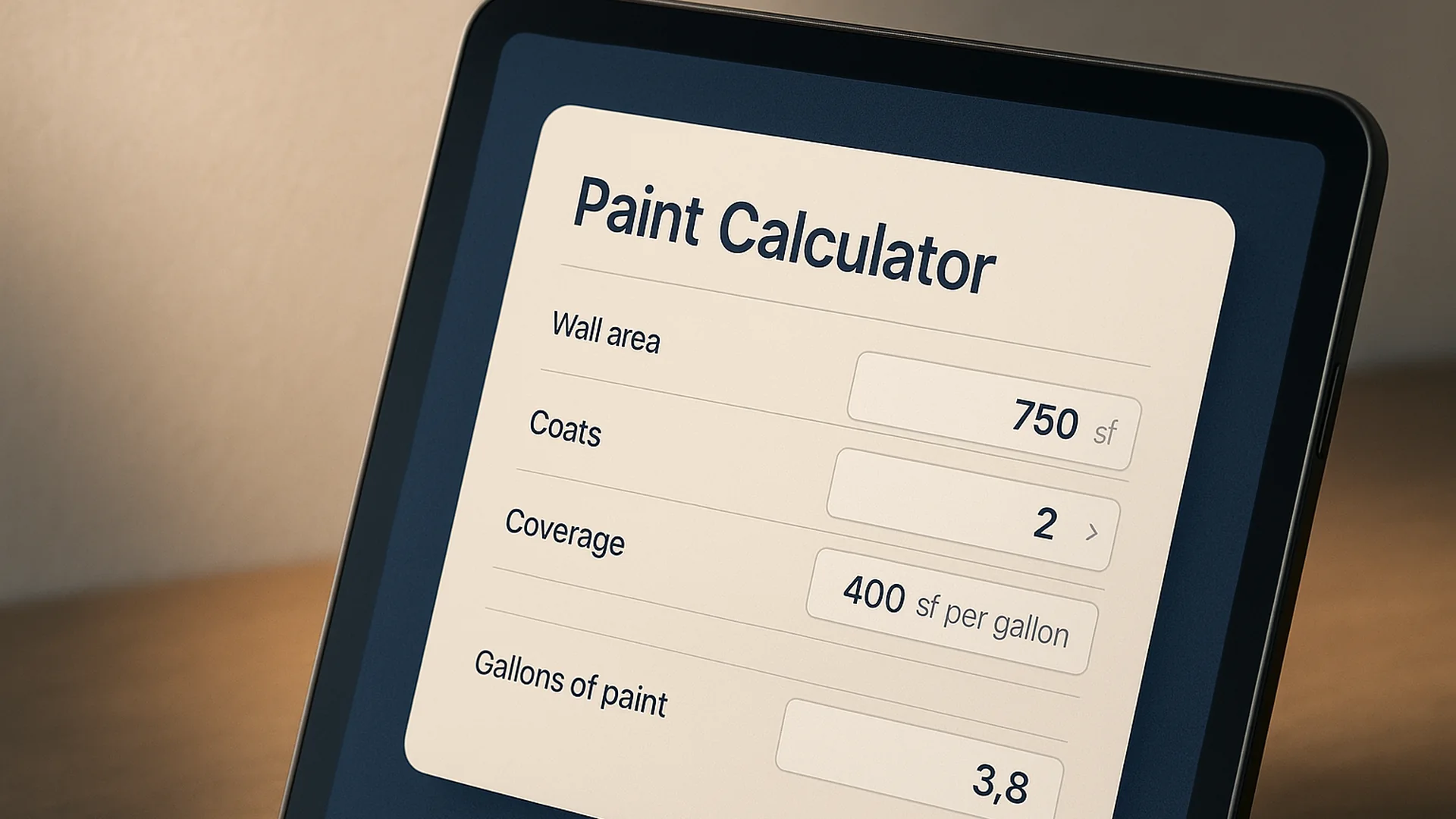
Estimate paint quantity and optional cost with area units, coats, coverage, and wastage controls.
How this is calculated
Paint required scales with surface area, number of coats, and the manufacturer coverage rate.
gallons = (area × (1 + wastage%) × coats) ÷ coverage_per_gallonrecommended_purchase = ceil( gallons )Coverage varies by paint type: latex / oil ≈ 350, primer ≈ 250, elastomeric ≈ 150 sq ft per gallon.
Porous surfaces, deep colour shifts, and rough textures all reduce effective coverage, so bump wastage to 15–20%.
How much paint do I need for two coats?
Set "Coats" to 2 and enter the same area. The calculator multiplies your surface area by the number of coats before dividing by coverage, so the gallon estimate is for the full job.
Why is my actual coverage less than the can says?
Manufacturer numbers assume smooth, sealed, primed surfaces. Texture, porosity, drastic colour shifts, and inexperienced applicators all reduce yield. Add 10–20% wastage when any of those apply.
Should I include the ceiling area?
Only if you're painting it. Add ceiling area to total area when ceilings get the same paint. If they're a different paint or colour, run the calculator twice, once per surface, so each gets its own coverage rate.
How many gallons for the walls, and whether bare wall needs primer
If you are painting a room, the two things that decide the trip to the store are how many gallons of colour the coats take and whether the surface needs primer first. Skip the primer question and you can end up buying a third gallon you did not plan for.
A worked example
Take a 12 ft by 16 ft room with 8-foot ceilings, which gives you 448 square feet of wall. For two coats of latex at about 350 square feet per gallon, that is 448 times 2, or 896 square feet, divided by 350, which is 2.56 gallons. You buy whole gallons, so that is 3. If the drywall is bare, add primer at about 250 square feet per gallon for one coat: 448 divided by 250 is 1.8, so 2 gallons of primer.
Common mistakes
- Trusting 350 square feet on a deep or bright colour. Strong bases and dark colours cover less per gallon and often want a third coat, so they behave more like the primer number than the topcoat number.
- Rolling colour straight onto bare drywall or a fresh patch. The flat paper soaks up paint and the patch flashes through, so prime first and the finish sits even.
- Buying to the exact gallon. Texture and what the roller holds back both eat into real coverage, so round up, and keep one sealed can for touch-ups instead of matching a colour a year later.
Everything here runs in your browser, and nothing you enter is sent anywhere or stored.
Paint coverage trips up most homeowners. This estimator is an example of the custom tools I build in, so your visitors stop guessing how many gallons they need. Book a discovery call
On the same job you may also need drywall sheets or tile and cuts. Every calculator here is free and runs in your browser.