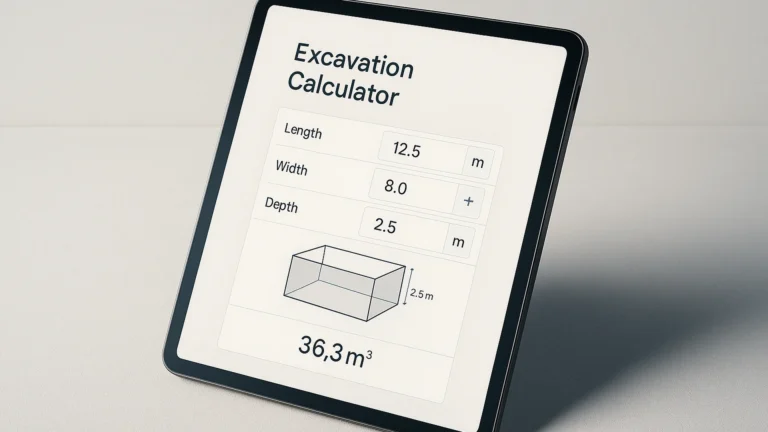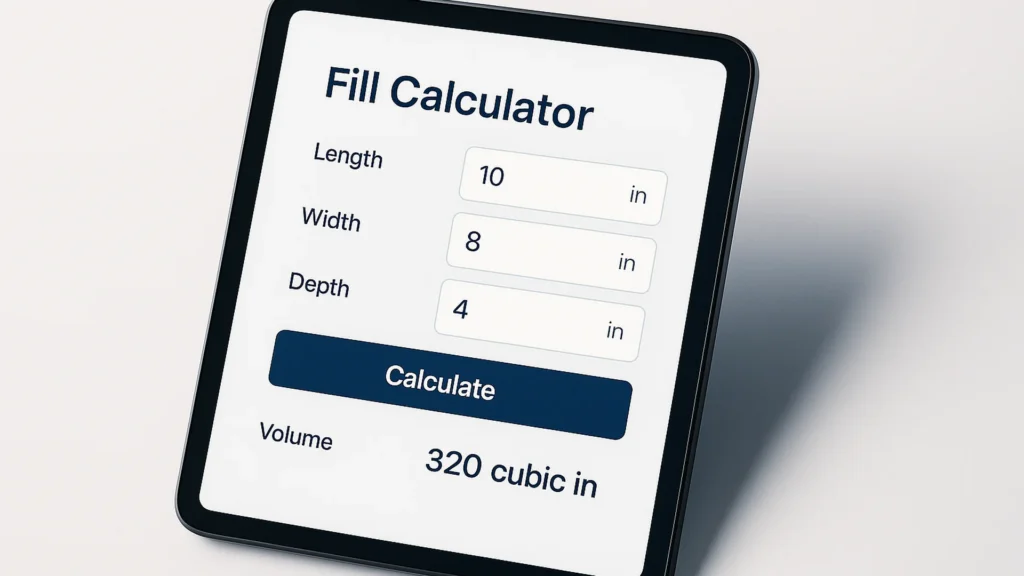
Estimate how much fill material to bring in and place. Handles sub-base, backfill, and grading lifts. Use the Excavation Calculator if you are removing material from a dig site.
How this calculator works
Volume is length × width × depth, with wastage and a compaction factor stacked on top.
cubic_feet = length × width × depth × (1 + wastage%) × (1 + compaction%)cubic_yards = cubic_feet ÷ 27
- Aggregate suppliers price by the cubic yard or by the ton; ask which.
- Soil expands when excavated and shrinks when compacted — set the compaction factor to match the haul or fill condition.
Common questions
How is fill priced — cubic yards or tons?
Both, depending on the supplier and material. Granular A is often priced per ton, topsoil per cubic yard. Always ask before ordering, and confirm whether delivery is included.
When should I use the compaction factor?
When you're bringing in fill that will be compacted in place. A positive compaction factor (e.g., +20%) means you need to order more loose material to end up with the target compacted volume.
Can I use this for crushed stone, gravel, or sand?
Yes — the volume math is identical. Use the supplier's recommended compaction factor for that material; gravel typically settles 10–15%, sand a bit less.
About This Fill Calculator
This fill calculator is designed to turn measurements into practical planning numbers you can use immediately. After entering length, width, depth, compaction assumptions, and optional cost-per-yard or cost-per-ton settings, the calculator processes those values into volume takeoffs, truckload planning, and cleaner communication with suppliers and site teams. The goal is to replace rough guesswork with a repeatable method that works for homeowner projects, contractor estimates, and field-level decision support. Instead of manually converting units and checking formulas in multiple places, you can complete the process in one workflow.
In day-to-day use, this fill calculator works best when measurements are taken carefully and entered in one unit system from start to finish. That makes results easier to compare and easier to share with suppliers or team members. It is especially useful for grading low areas, backfilling trenches, preparing pads, and improving drainage zones where quick quantity checks can prevent under-ordering, over-ordering, and schedule changes. Using consistent inputs each time also helps standardize estimating habits across repeat jobs.
The most reliable outcomes come from combining calculator output with practical project checks. For this fill calculator, that means allowing for compaction behaviour and practical delivery increments from local suppliers. Treat the result as a planning baseline, then adjust for site conditions, product availability, and project standards before final purchase or scheduling commitments. This approach gives you a safer buffer against costly surprises and keeps conversations with clients, vendors, and crews focused on clear numbers.
Use this fill calculator as an early planning assistant, not a replacement for final site validation. It helps you test scenarios quickly, compare alternatives, and move from idea to workable estimate with fewer delays. When paired with accurate measurement habits and a final field review, the calculator can improve confidence at every stage: draft budgeting, quote preparation, procurement planning, and pre-install coordination. Revisit it whenever dimensions, material assumptions, or scope details change.