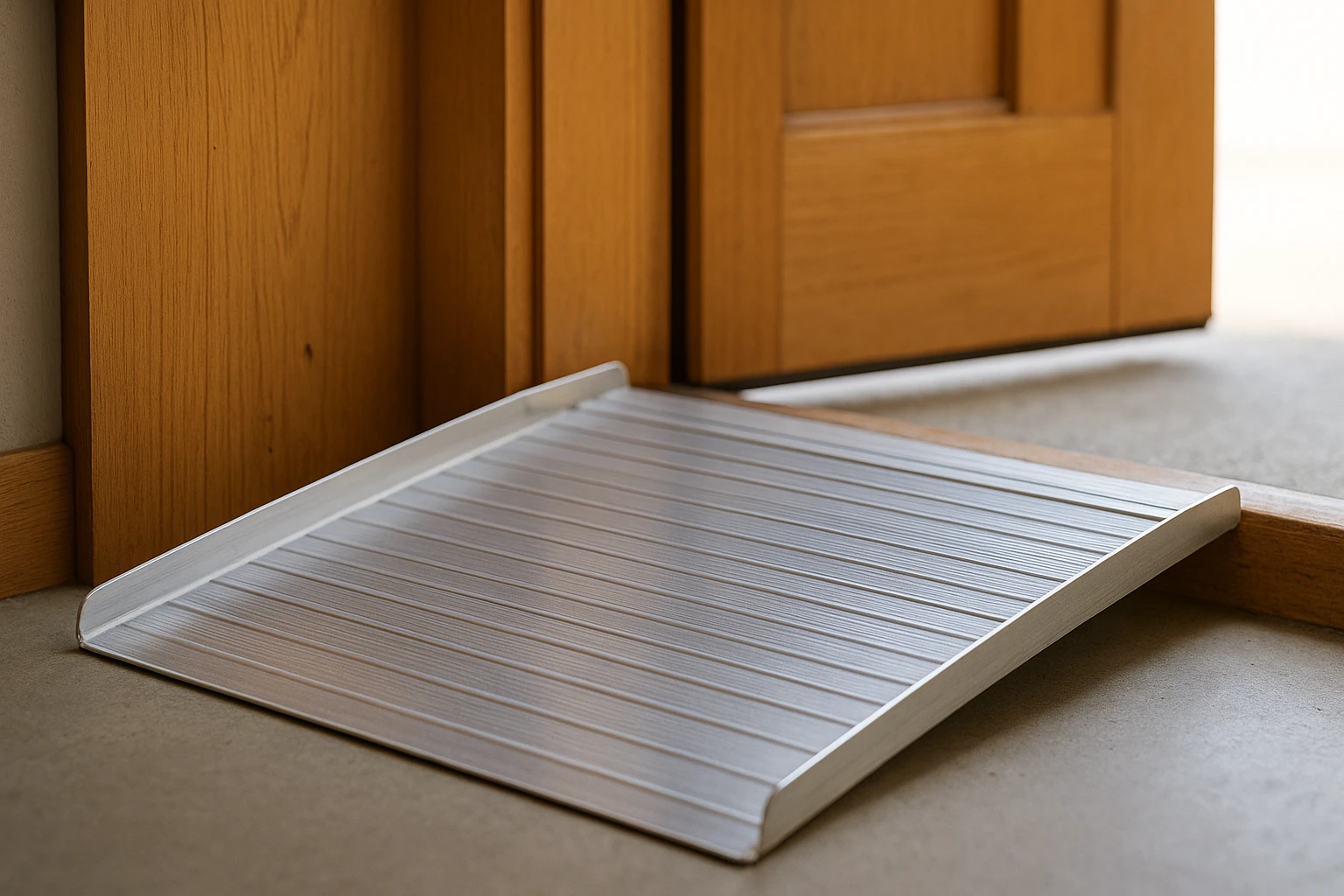
When I was about eight, my parents took the family to a Greek restaurant in Hamilton. The dining room was in the basement, and one entire wall was fish tanks, which for an eight-year-old should have been the highlight of the evening. It wasn’t. Outside the front door sat a ramp, the first one I remember ever noticing, and inside was an open elevator that looked borrowed from a construction site.
All evening, older people came and went on that elevator, some in wheelchairs, some just glad to skip the stairs, and eventually I asked my dad why this restaurant had so many people in wheelchairs. “Because they’re the only restaurant that caters to them,” he said. I was a kid. I didn’t get it.
I get it now. That basement restaurant was making a business decision, and a sharp one. Every family in the region with a grandmother who used a wheelchair drove past a lot of other restaurants to reach the one that welcomed her, and the whole family came with her, and they came back. The ramp was the reason the room was full.
The short version:
- Accessibility is a business decision first and a compliance box second.
- The accessible path costs your other visitors nothing, and for some of them it is the only path in.
- You can run an honest first check yourself in two minutes, using only your keyboard.
- Built in from the start, accessibility stays a small line item instead of a scary retrofit.
Websites have ramps too
On a website the ramps are just harder to see. Captions on a video serve the person who can’t hear it, and they also serve the person watching in a quiet waiting room. Strong colour contrast serves low vision, and it rescues anyone squinting at a phone in July sunlight too. Keyboard navigation serves people for whom a mouse is the barrier, plus the power user who abandoned theirs years ago. Building the accessible path costs the rest of your visitors nothing, and for some of your visitors it is the only path there is.
The ramp was the reason the room was full.
The two-minute test
Here is the fastest honest audit you can run without hiring anyone. Unplug your mouse, or just refuse to touch it. Now use your own website: reach the menu, open a page, get to the contact form and fill it in, using nothing but Tab, Enter, and the arrow keys. Watch for the places where the little focus outline vanishes and you’re lost, where a menu opens for a hover you can’t perform, where the form traps you in a field. If you finish the test frustrated, you’ve just met your website the way some of your visitors meet it every day.
Worth remembering: that restaurant built its ramp and its elevator decades before any law asked it to, because the owners understood who fills a dining room. Today, if you lead a school, a college, a municipality, or a larger organization in Ontario, a good portion of this stopped being advice years ago. The accessibility deadlines under provincial law have already passed, and public-facing websites are squarely inside them. But treating the law as the goal misses what the restaurant understood: compliance keeps you out of trouble, while welcome fills the room. Your students and your patrons travel with families, and families choose the places that work for everyone at the table.
What baked-in actually looks like
Accessibility behaves like plumbing: easy while the walls are open, expensive once they’re closed. Baked in, it looks small at every step: colour contrast gets checked when the palette is chosen and changing it is still free, image descriptions get written while the person uploading still remembers why the image is there, keyboard behaviour gets tried the day the menu is built, and captions ride along with the video order while the transcript is fresh. Each one is a minor line item in the moment, and together they mean there is never a scary retrofit project waiting at the end.
Run the two-minute test on your site this week, or make it the first item in a proper audit if the stakes warrant one. And if the test goes badly, ask me where to start. That question is one I always make time for, the same way I make time to fix plugins I don’t own.
Common questions about accessibility
Is accessibility just about following the law? No. The law is the floor. That restaurant built its ramp decades before any law asked it to, because it understood who fills a room. Compliance keeps you out of trouble, and welcome is what brings the whole family back.
Will accessible changes make my site worse for everyone else? No. Captions, strong contrast, and keyboard support cost your other visitors nothing, and they quietly help people you were not even counting on.
Where do I start if the two-minute test goes badly? Start with the check itself, then fix the spots where you got stuck one at a time. If you would rather not do it alone, just ask me where to begin.
Leave a reply