
Speed optimization is the work to book when your WordPress site is slow, you are losing rank or conversions because of it, and you want a senior developer to fix the actual cause instead of throwing another caching plugin at it.
Senior WordPress engineering since 2007 · E-E-A-T-first builds with verified schema, AODA and WCAG 2.2 AA compliance · dozens of plugins released, five on WordPress.org, 18+ WordCamp talks · Fort Erie, Ontario
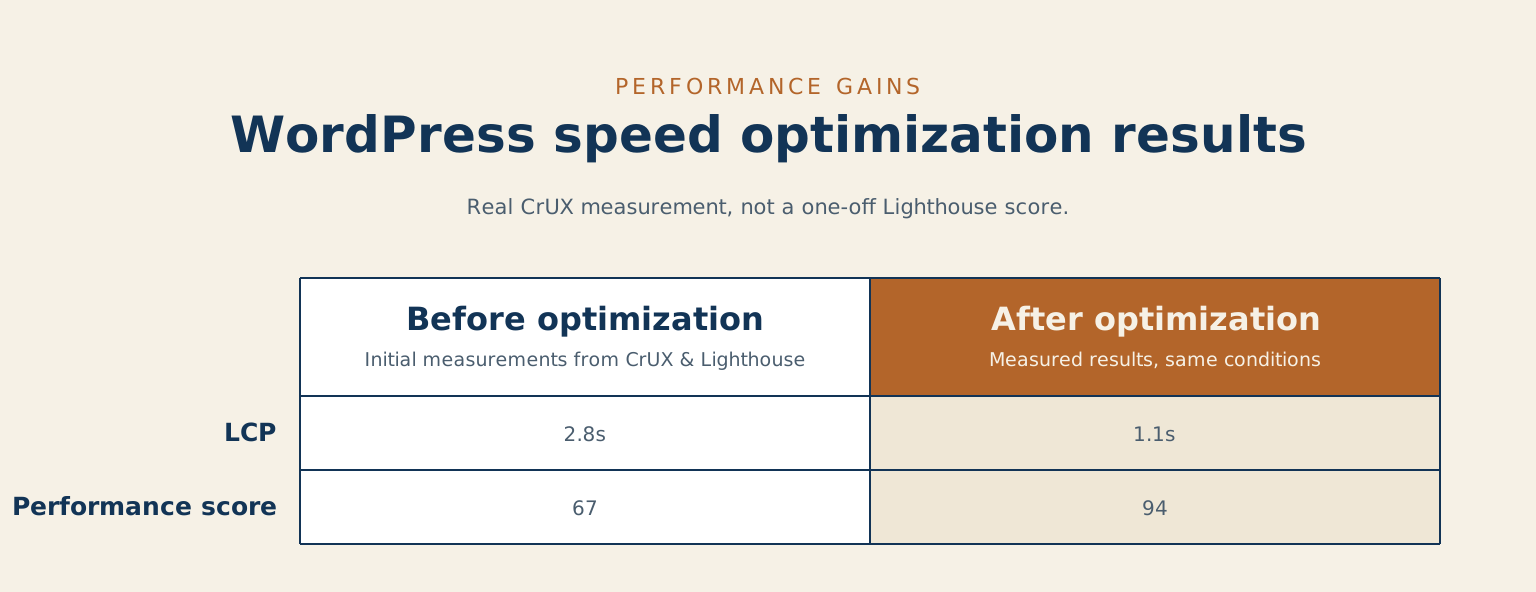
Most recent engagement: LCP 2.8s → 1.1s, Performance score 67 → 94. Real CrUX measurement, not a one-off Lighthouse score.
Book the 20-minute discovery call See full pricing and scope
The problem you’re solving
Your LCP is past 4 seconds on mobile and Search Console is flagging Core Web Vitals on more URLs every month. The last “speed plugin” you installed made the front-end ten percent faster and broke the cart on a fifth of mobile devices.
Most WordPress speed problems are not solved by adding a tool. They are solved by removing the weight that should not be there, fixing the rendering path, sizing the images at upload, and understanding which third-party script is actually blocking the page from rendering for 800ms.
What you get
Five artifacts. Same scope every time.
- A baseline Core Web Vitals report. Real-user metrics from CrUX where available, plus lab data from Lighthouse on three key templates (homepage, a money page, an article or product page). LCP, INP, CLS, TTFB. The starting line, in writing.
- A diagnosis pass. Where the weight is coming from: theme, plugins, third-party scripts, image pipeline, server response, render-blocking resources. Documented with screenshots and the specific request waterfall.
- An implementation pass. Cache configured properly, images sized and converted, render-blocking resources deferred or inlined, database cleaned of expired transients and orphan post meta, font loading fixed, plugin bloat trimmed where safe.
- A measured after report. Same templates, same conditions, side-by-side numbers. If the work did not move the numbers, the report says so honestly.
- A short written handoff. What I changed, why, and what to keep an eye on. Two to three pages. Your developer or your host can pick it up from there without another call. The walkthrough names what changed and why. The next time the cache drifts or a third-party script gets added, your team recognizes the pattern.
Diagnosis uses Lighthouse, CrUX, and waterfall analysis; where Artificial intelligence (AI) tools accelerate the work (log triage, regression-watch summarization), the report names them, and the senior-developer judgement on what to change is mine.
What this is not
- Not a theme rebuild. If your theme is the bottleneck and the right answer is a rebuild, the report will say so and the rebuild is a separate engagement.
- Not a plugin replacement project. I will retire safe-to-remove plugins, but swapping a page builder or a major plugin is its own scope.
- Not a hosting migration. If your host is the bottleneck, I will tell you and recommend hosts that fit your workload. Moving you is not in this sprint.
- Not unlimited revisions. One pass, measured, reported. Anything that surfaces as needing further work goes into the written handoff with an honest scope estimate.
Who this is for
- Fit. Operating WordPress sites with a real performance problem and real revenue or lead flow at stake.
- Fit. Marketing teams whose SEO consultant is flagging Core Web Vitals as the next blocker.
- Fit. Site owners who have already tried the obvious caching plugin and hit the ceiling.
- Not fit. Sites still under construction. Optimize after the build settles.
- Not fit. Buyers looking for “$99 speed services” that install WP Rocket on autopilot and call it done.
The five-day optimization engagement, day by day
- Day 1. Access provisioned. Baseline measurements captured. CrUX, Lighthouse, request waterfalls, third-party audit. First-impressions email by end of day.
- Day 2. Diagnosis written up with screenshots. Implementation plan confirmed with you in writing before I touch the site.
- Day 3. Implementation pass on staging if you have one, on production with backup if you do not. Cache, images, render path, database hygiene.
- Day 4. After-measurements captured under the same conditions. Side-by-side report assembled.
- Day 5. Delivery. Report PDF, written handoff, and a 30-minute walkthrough call if you want it.
Why work with me on this specifically
- WordPress development since 2007. Performance work has been part of the job since well before “Core Web Vitals” was a phrase.
- Audit-class engagement experience. Speed optimization uses the same diagnostic discipline as the full WordPress Site Audit ladder, scoped to the performance surface.
- Curriculum developer and instructor at the M.L. Campbell Training Centre, Sherwin-Williams’ training facility. Part of the team on the Postmedia network migration (2011–2012), where ad-stack performance under publishing load was a daily problem.
- Author of practical WordPress and SEO articles. Speaker at WordCamp Toronto.
Common questions
Will this improve our Google ranking?
Speed is a ranking factor, and a modest one. The bigger effect is on the people already arriving: a page that takes five seconds loses a meaningful share of visitors before it ever renders, and that shows up in enquiries rather than in rankings. If your traffic is fine and your enquiries are not, speed is a reasonable place to look.
What if the theme is the problem?
Then I will tell you, and it is one of the more common answers. A page-builder theme carrying eight hundred kilobytes of CSS to render a headline cannot be optimised into a fast site, only into a less slow one. At that point you are choosing between a real improvement and a genuine fix, and you should make that choice with the number in front of you.
How long do the gains last?
Until something undoes them, which is usually a new plugin, a marketing script, or an untested update. That is not a reason to skip the work, it is a reason to know what to watch. I document what was changed and why, so the next person adding a tag manager can see what they are about to spend.
Ready when you are
Speed optimization, three tiers. An audit-tier engagement ships a written findings report you can hand to your developer. The five-day optimization engagement covers audit plus implementation. The monthly retainer keeps the gains from rotting.
Book the 20-minute discovery call See full pricing and scope
Tell me about your project
The fastest way to a straight answer. Tell me what you need and I will reply within a business day, honestly, even when the answer is that I am not the right fit.
Prefer to talk? Call 647-641-0643
Share your project details
Use this form for project scope, technical SEO support, onsite training requests, or a focused next-step conversation.