There’s a stretch of road in the hills where the radio gives up and the gas stations get further apart, and that’s where I started looking for a place to sleep. Two hours out. Still light, but the kind of light that tells you to stop driving soon. I found a small inn on my phone, the sort of place with six rooms and a name that sounds like somebody’s grandmother. Looked perfect. The listing had a photo of a porch with rocking chairs, and a phone number.
I don’t call strangers from a moving truck. Never have. I wanted to know one thing, whether they had a room for the night, and I wanted to ask it the way I ask everybody things now, by typing a few words with my thumb and setting the phone back down. There was no way to do that. Just the number. So I kept driving, and twenty minutes later I booked a chain place off the highway because the booking button worked and I was tired. The inn with the rocking chairs never knew I existed.
Here is the thing nobody tells small lodging owners, and it applies to restaurants and galleries and farm stands too. The people coming down your road are often already moving. They’re an hour or two out, deciding in real time where they’ll be at dark. They are not going to pull over to make a phone call. They text. They text their kids, their dog sitter, the friend they’re meeting. And when they find your place and there’s no way to send a quick note, they don’t wait. They scroll back to the search and pick the next one.
Your Google® listing, the little card that comes up when somebody searches your name, can take texts. Google calls it Messages. Most owners never turn it on, and I understand exactly why. It feels like one more inbox to babysit. You already answer the phone, the email, the booking site, the front desk. The last thing you want is a new channel pinging at you all evening. So you leave it off, or you never knew it was there to leave off.
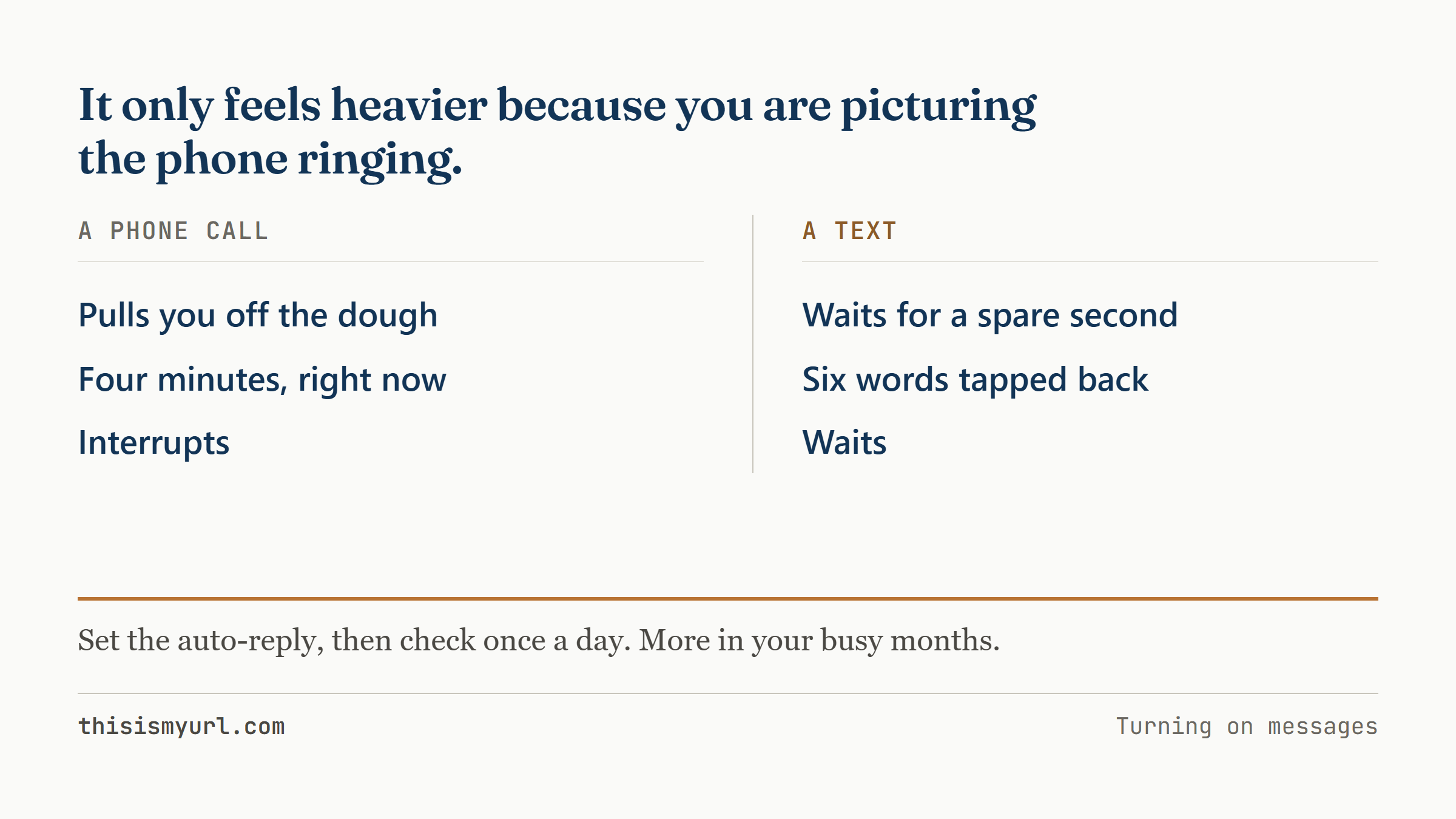
A text is the lighter of the two. A call pulls you off the dough; a text sits and waits for a spare second. A call interrupts you. You stop kneading the dough or making the bed and you talk for four minutes. A text waits. You glance at it between things and tap back six words. It only feels heavier because you’re picturing the phone ringing.
Here’s how to switch it on. Go to business.google.com and sign in with the Google account that runs your listing. Look down the menu on the left for Messages. Click it, and turn it on. From then on, notes from travellers land on your phone through the Google Maps app or as texts, depending on how you set it up.
Then do the one thing that makes this manageable. Set up an automatic reply. It’s a short note Google sends the second somebody messages you, so they’re not staring at silence. Something plain works best: “Thanks for reaching out. We’ll reply shortly. If it’s urgent, call us at,” and then your number. That auto-reply buys you hours. Somebody texting from the highway sees it, knows they reached a real place, and keeps your inn in mind instead of scrolling on.
One habit goes with it. Check the messages once a day, more in your busy months. A question sitting twelve hours is a bed that stayed empty, and a traveller’s patience runs out about that fast.
The whole thing takes about ten minutes, sitting at your own kitchen table, no help needed.
That inn charged a hundred and forty a night, I saw later when I looked it up again. The chain took my money instead, and I slept under a ceiling I don’t remember. The porch with the rocking chairs was probably empty that night.