The week of June 6 had three tracks running at once, which is more typical than I like to admit. A theme collection, a podcast, and a filing job. One of them was supposed to be the quiet one.
The week in short:
- Converted eight Colophon themes to full-site editing.
- Recorded the first Declamatio episode, and reached a standard after six takes.
- Tagged twenty-eight column posts with pillar taxonomy and wrote the production gates down.
Converting eight colophon themes to full-site editing
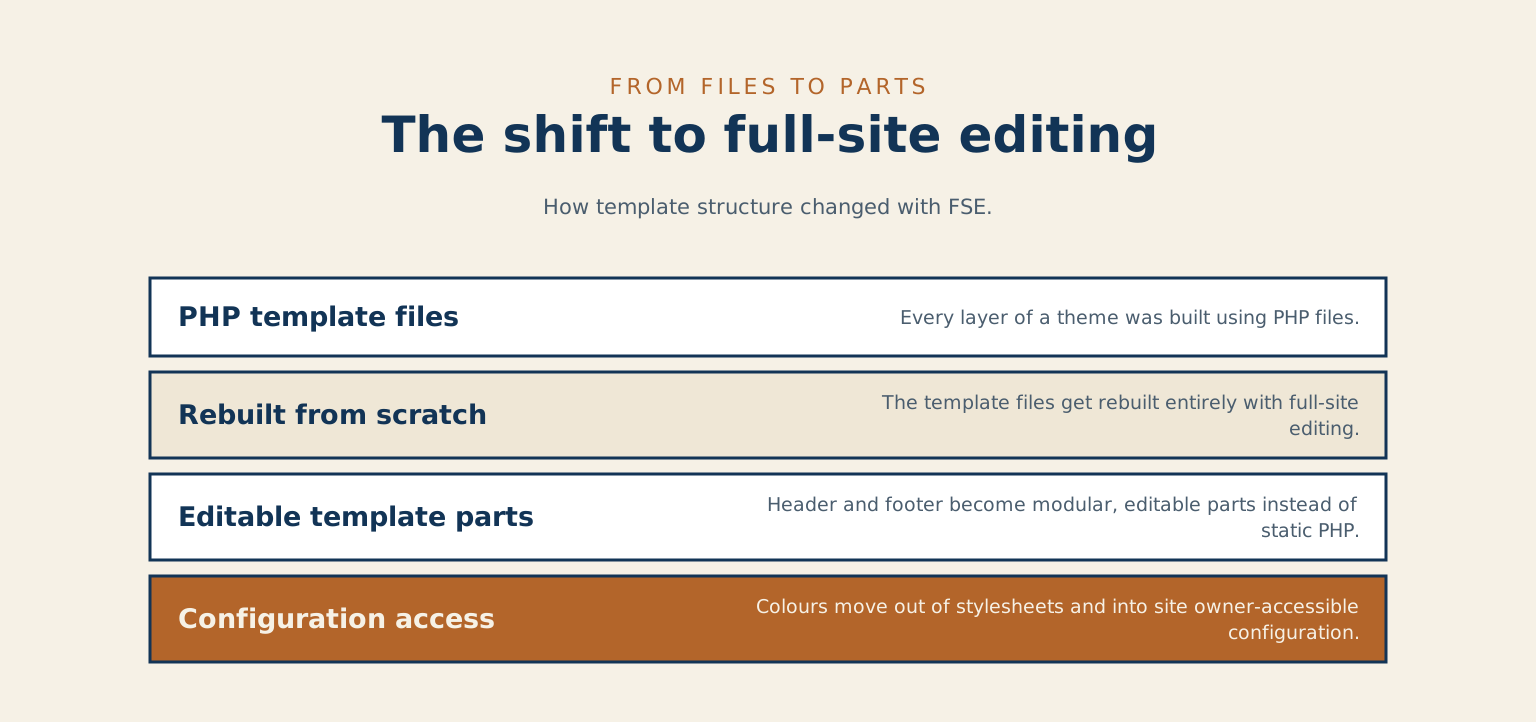
I spent the first half of the week inside the Colophon theme collection, all eight of them, converting each to one hundred percent full-site editing. Full-site editing touches every layer of a theme. The template files get rebuilt from scratch, the header and footer become editable template parts instead of PHP files, and even the way colours get declared changes, moving out of stylesheets and into configuration the site owner can actually reach. The first conversion took the longest, the way first ones do. By the third theme I had a rhythm; by the sixth I had a checklist; by the eighth the checklist had grown corrections from the five themes before it.
Then I pushed each theme through the WordPress.org compliance review, which has a talent for surfacing the things local testing never will. Hardcoded footer text. A feature claim the theme could not actually back up. Small on their own, each one blocks submission, and together they exposed gaps in a build process I had never bothered to write down. That stung a little, because I tell clients to write their processes down all the time. By Thursday all eight had GitHub Pages live previews, documented developer hooks, Artificial intelligence (AI)-directed hero images for the two that needed them, and a submission-ready ZIP for the first one out the door.
Declamatio, episode one, take six
I have been planning Declamatio for a while. This was the week it stopped being a plan and became audio. Episode one went through six takes, which is the quality spiral you get when you are setting a production standard for the first time and have no prior version to disappoint. Each take fixed one thing and revealed the next. The intro timing was off. One channel carried a thirty-nine-second glitch from a mismatch in how the voice cast was assembled, the kind of defect you only catch by listening to the whole episode again, at normal speed, like an actual listener would. A character named Walter had to become Claire, for reasons that made sense at the time and somehow still do.
By Friday both episodes were complete, mastered, and on the server, and I had locked a twenty-six-episode season arc. That quietly changes the work, from let us try this to let us build this. Six takes on episode one is not a number I want to repeat, but it bought something worth having: every episode after this one inherits the standard instead of searching for it.
Six takes on episode one is not a number I want to repeat, but it bought something worth having: every episode after this one inherits the standard instead of searching for it.
Tagging twenty-eight posts, and the gap it found
The third track was the quiet one and probably the most load-bearing. I ran a full audit of the column archive, tagged twenty-eight posts with pillar taxonomy, and started writing down the production gates that had been living in my head instead of in a document. The tagging sounds like filing, and what it did was make a gap visible: a real share of posts I thought were on-pillar turned out to be adjacent. Close enough to publish, not close enough to compound.
It is the difference between books shelved in the right section and books that are merely interesting and got filed wherever there was room. A researcher scanning the shelf can follow the through-line in the first case and never finds it in the second. That distinction is the whole game, and it does not show up until you map it. The gates document that came out of the same afternoon is the part I expect to still be using a year from now, because a rule that lives in a document survives a busy week, and a rule that lives in my head does not.
What I took from the week
Each track finished because its ending was specific: a submission-ready ZIP and live previews for the themes, two episodes on the server for the podcast, and for the audit, all twenty-eight posts tagged. When the exit condition is fuzzy, a track gets abandoned the moment the next thing starts, and I have the half-finished projects from earlier years to prove it. Last week the lesson was about timing. This week it was about endings, and endings turn out to be a thing you design rather than a thing that happens. If you want the same discipline applied to your own site, scoped to a specific outcome before the work starts, that is what the first conversation is for.
Leave a reply