Custom plugins, themes, REST APIs, and application-class WordPress builds, built to the standard they will still be maintainable by a developer in three years.
WordPress since 2007 · custom post types, REST endpoints, Gutenberg blocks, WP-CLI, and site-specific plugin architecture · 20+ plugins published on WordPress.org · Fort Erie, Ontario
Book a discovery call See full service details
What brings people here
A plugin was installed to solve a problem and it solved it badly. Five years of “we’ll refactor that later” has accumulated into a codebase nobody wants to touch. The developer who built the custom theme is gone and left no documentation. The site works, mostly, until something changes, and then it doesn’t.
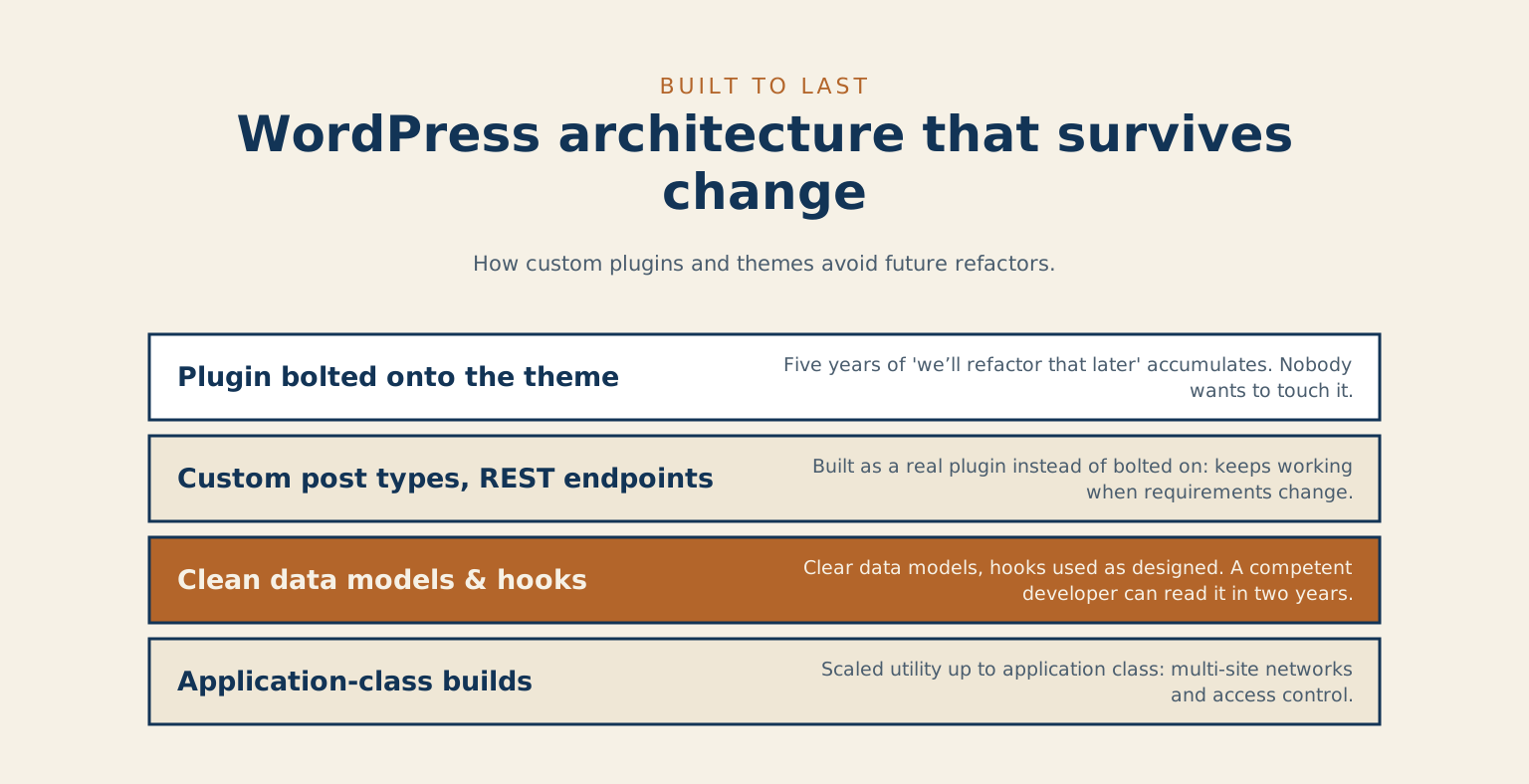
The work here is bringing WordPress engineering discipline to codebases and features that need it: clear data models, hooks used as designed, queries that don’t kill the server at 500 concurrent visitors, code that a competent developer can read in two years.
What I build
- Custom plugins: A feature you own that keeps working when the requirements change, built as a real plugin instead of bolted onto the theme, so it survives the next update and the next redesign. Under the hood that is REST endpoints, outside integrations, and clean data models, scaled from a focused utility up to an application-class build.
- Theme development: A site your team can actually run day to day, and that the next developer can pick up without a rescue mission. Fast for visitors, shaped around how your editors really work, and documented so the handoff is not a cliff. Block-editor-native or classic, whichever fits.
- REST API extensions: Headless integrations, third-party data syncs, mobile app backends, external reporting dashboards.
- Application builds: A platform that still holds when the traffic climbs and the org chart changes, so you are not rebuilding it in two years. Multi-site networks, the access control a larger team needs, and data models built to carry the load, for the cases where WordPress is genuinely the right platform.
- Codebase reviews and rescues: Audit of an inherited codebase, priority list of what needs fixing before anything new is built, and a clear statement of what the site can safely do now.
Who this is for
- ✅ Businesses whose WordPress install has grown past what plugin configuration can solve: the next problem requires code.
- ✅ Development teams that need a senior contractor for a complex feature or a codebase that has gotten away from them.
- ✅ Organizations migrating or rebuilding a platform that has to keep its search traffic through the transition.
A note on scale, because it saves everyone time. Below roughly $2,750 you are better served by a developer at a lower rate than by senior pricing on an hour-long fix, and I will tell you that rather than take the work. I also work project-based or on a structured retainer rather than as an embedded developer on chat all day, which is a different service and there are people who do it well.
Every engagement starts with the free 20-minute discovery call, followed (if it makes sense) by a paid scoping session (1–3 hours) that produces a written technical spec. Scoping hours credit against the build if you proceed; the spec is yours to keep if you do not. See the canonical custom-plugin engagement page for the full process.
Common questions
Can you work alongside our existing developer or team?
Yes, and it is often the best shape. Plenty of engagements are me taking the one piece nobody in-house has time or specialist knowledge for, while your team keeps everything else. I write for the next developer to read, which matters more when the next developer is sitting in your office.
Who owns the code?
You do, completely, from the first commit. It goes in your repository, under a licence you choose, with documentation. No component is built so that only I can maintain it and nothing phones home to me. If you decide to take it elsewhere in a year, the handover is a conversation and not a negotiation.
What happens if the requirements change mid-build?
They usually do, and that is normal rather than a failure. Small changes absorb into the work. Anything that moves the shape of the thing gets priced and agreed before it is built, so you are never surprised by an invoice and I am never quietly building something nobody approved.
Tell me about your project
The fastest way to a straight answer. Tell me what you need and I will reply within a business day, honestly, even when the answer is that I am not the right fit.
Prefer to talk? Call 647-641-0643
Share your project details
Use this form for project scope, technical SEO support, onsite training requests, or a focused next-step conversation.