When someone in Niagara Falls types “plumber near me” or “best bakery on the Falls” into Google, the results that come back aren’t random. Google runs through millions of signals in a fraction of a second and decides which businesses to show, and in what order. Your business might have been at the same address for fifteen years, with genuine five-star reviews from regulars and a word-of-mouth reputation that keeps the phone ringing. None of that automatically earns you a place at the top of those results.
I work with local businesses in Niagara Falls on exactly this problem. Not because search optimization is complicated in principle, but because the gap between “having a website” and “having a website Google trusts enough to recommend” is more specific than most people expect, and more fixable than most marketing pitches suggest.
What Google is actually looking for
Think of Google like a librarian who has never visited Niagara Falls, but gets asked hundreds of times a day to recommend local businesses. The librarian can only work from what’s been written down. If multiple reliable sources all agree that your business is at a specific address, offers a specific service, and has been operating for years, the librarian gains confidence and makes the recommendation. If the sources contradict each other, or say almost nothing at all, the librarian hedges.
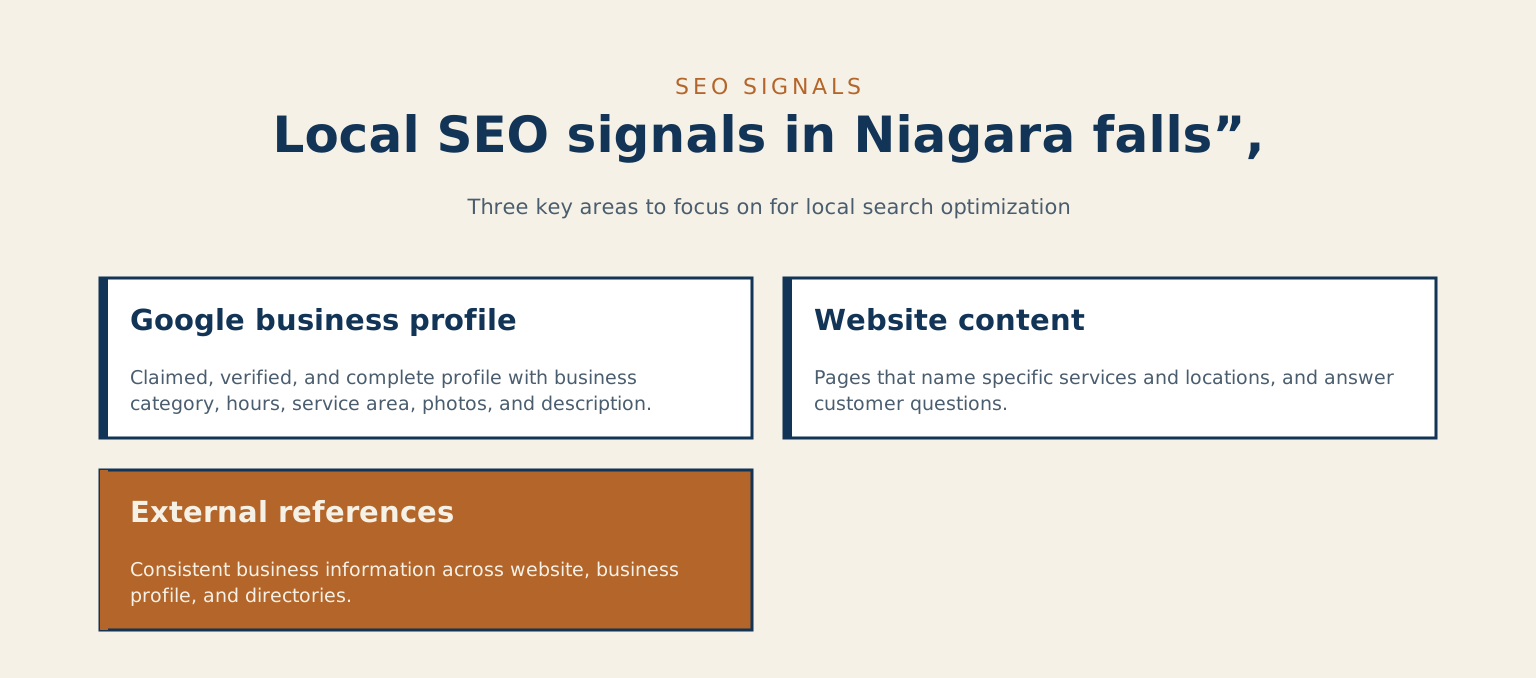
That’s the heart of local SEO. Google is a pattern-recognition system trying to build confidence that your business is real, relevant to what was searched, and actually located in Niagara Falls or wherever you serve. The signals it draws on come from three main places: your Google Business Profile, the content on your website, and the way other websites and directories reference you.
Most businesses I look at in this area are behind on at least one of those. Often all three, and the gaps reinforce each other. The good news is that these are specific, fixable things, not mysteries.
The three things worth getting right
If you’re going to invest time or money in local search, here’s where it actually counts:
- Your Google Business Profile. This is the listing that shows up in Google Maps and the information panel alongside search results. It needs to be claimed, verified, and filled out properly: business category, hours, service area, photos, and a plain-language description of what you do and where. An incomplete profile is a missed opportunity. An unverified one is close to invisible, no matter how good the rest of your online presence is.
- The words on your website pages. Google reads your pages to understand what your business actually offers. A homepage that says “welcome to our company” and nothing much else gives Google very little to work with. Pages that name specific services and specific locations (Niagara Falls, Niagara-on-the-Lake, Fort Erie, wherever you actually serve) and answer the questions your customers are already typing into search tend to rank better than pages that speak in generalities. This is also the most common problem I find: the website looks fine as a brochure but tells Google almost nothing.
- Your business information, consistent across every place it appears. Name, address, phone number. If these show up differently on your website, your Business Profile, your Facebook page, and a local directory, Google reads each inconsistency as a reason for doubt. Tedious to track down and fix, but it matters more than most people expect, and it’s the kind of thing that quietly drags everything else down.
These aren’t the only signals Google uses. Local search draws on dozens of factors, including reviews, how often your Business Profile is updated, and how your site performs on a phone. But these three are where most Niagara Falls businesses have the clearest gaps, and where the most straightforward improvements tend to live.
When it makes sense to bring in help
Some of this you can work through yourself. Claiming your Google Business Profile and keeping it current doesn’t require a consultant. Writing more useful content for your website pages is something most business owners can handle once they understand what Google is looking for. If you read through the three points above and already know which one is your weak spot, you probably have a good starting point.
Where it gets more technical is the underlying structure of your website: how fast it loads, whether Google can actually crawl and index your pages correctly, whether there are duplicate pages or broken links quietly working against your rankings. These things don’t show up when you look at your site in a browser. They show up in an audit. And they matter more than people realize, because a technically broken site can undermine content that would otherwise rank fine.
I offer technical SEO consulting for businesses in Niagara Falls, from a one-time audit with a clear action list through to ongoing work. For businesses running WordPress, I can often address the technical SEO issues and the site architecture in the same engagement, since both affect how Google reads and ranks your pages. If you’re curious how the web side of things fits into a broader local presence, there’s more on how I approach web work for Niagara-region businesses.
If you’re not sure where your site currently stands, that’s usually the right place to start. Get in touch and we can figure out what’s actually going on before talking about next steps.
Tell me about your project
The fastest way to a straight answer. Tell me what you need and I will reply within a business day, honestly, even when the answer is that I am not the right fit.
Prefer to talk? Call 647-641-0643
Share your project details
Use this form for project scope, technical SEO support, onsite training requests, or a focused next-step conversation.