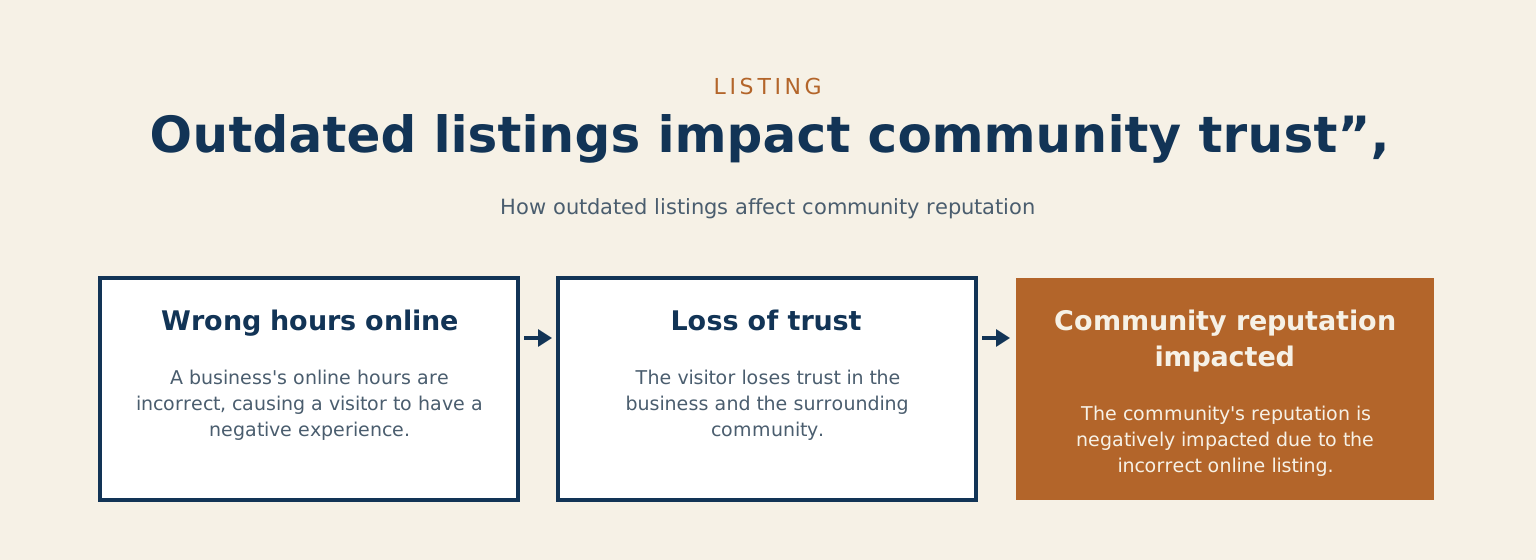
A family pulls off the highway on a Saturday, aiming for the antique shop they found online. The listing says open until five. They arrive at two and the door is locked, a paper sign taped inside: closed for a family thing, back Monday. Fair enough, life happens. But watch what the family does next, because this is the part that costs everybody. They don’t just leave the antique shop. They stop trusting the whole street. The cafe two doors down says open until four, but does it? The pottery studio lists summer hours, but are those real? They get back in the car, and the town that spent money convincing them to stop just taught them not to.
That’s the thing about stale listings nobody tells you: your Google profile isn’t just your storefront, it’s a reference for every business around you. Visitors judge a place as a unit. One wrong set of hours reads as bad luck. Two reads as a pattern, and a pattern reads as “this town’s information can’t be trusted,” which quietly deletes every future stop from the itinerary.
Why good businesses go stale
Nobody plans to have wrong hours online. It happens the way dust happens. You set the listing up years ago, the seasons changed, a stat holiday came and went, you started closing Mondays in the shoulder season, and none of it made the trip from your head to Google. The information quietly stopped being true, and no alarm goes off when that happens.
The fifteen-minute fix, and the street-sized version
The individual fix is fifteen minutes: search your own business name, check what Google shows against what’s actually true, and correct the hours, the phone number, and the holiday schedule at business.google.com. Do the same on your website and Facebook page while the kettle’s on. Then put a repeating reminder in your calendar for the first Monday of each season, because hours drift every season and the reminder is what catches them.
The community version is where it gets powerful. If you’re in a business improvement area, a chamber, or even just a group chat with the other owners on your block, make listing checks a shared season-opening ritual, the same way everyone sweeps their sidewalk. One morning, coffee and phones, everybody verifies everybody. It costs nothing, and it means the family that drives twenty minutes off the highway finds a street where every promise made online is kept in person.
Because that’s what accurate hours are: a kept promise, the first one a visitor ever tests. Keep it together as a street and visitors extend the trust to every door on it. Break it alone and everybody pays, unfairly but truly, for the paper sign on yours.