
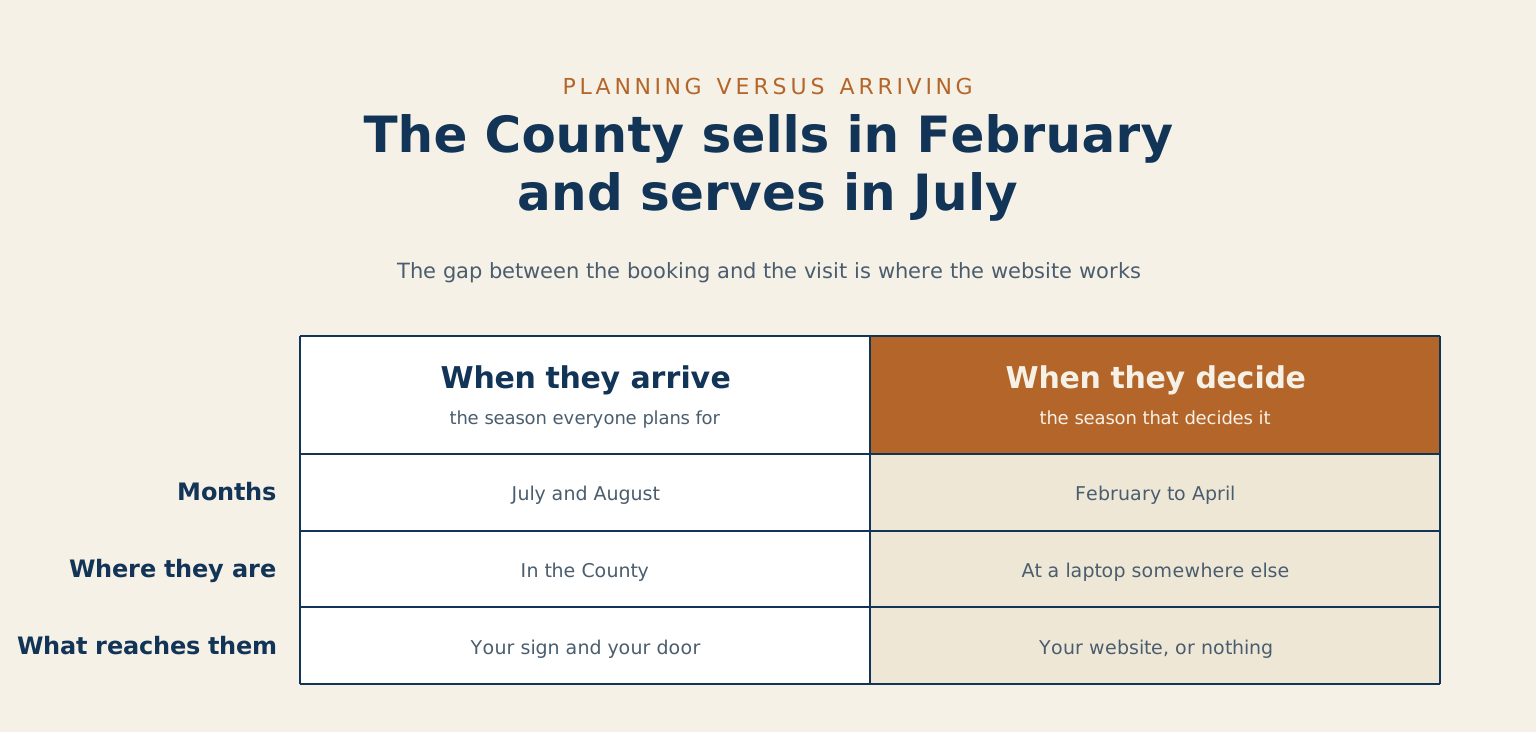
Prince Edward County has spent years trying to turn a summer into a year. The websites here are one of the places that gets decided, because a visitor plans in February for a weekend in July.
Work is done remotely, and after launch monthly care covers the updates, backups and monitoring if you want it.
Building on the web since 1996, in WordPress since 2007 · accessibility built in from the first commit, AODA and WCAG 2.2 AA · WordCamp speaker at 18+ events · Fort Erie, Ontario
If you run a business in the County that is busy from June and quiet from November, this is for you. Whether you call it web design, web development or just getting the website sorted, the question underneath it is usually the same one: how do you get found by somebody who is planning a trip they have not taken yet.
 Map of Prince Edward County with Picton and the surrounding villages marked: Picton, Bloomfield, Wellington, Cherry Valley, Milford, and Waupoos. Christopher Ross builds and supports websites for businesses here, working remotely.
The County problem is a calendar problem
Prince Edward County is a designated viticultural area with close to forty wineries and a tourism economy that carries most of the county. It is also, structurally, a place that empties out. That is why the chamber, the Picton Business Improvement Association and Visit The County have spent real effort on building a year-round visitor economy, and why some wineries have converted barrel cellars into tasting rooms that can open in the cold months.
A website is unusually powerful against that problem, because it is the one part of the business that can trade in February. The visitor books a summer weekend from a laptop in the winter, and whoever answers their question at that moment gets the booking. A site built only for the season it is busy in misses the season it actually sells in.
Working with someone who is not down the road
I work from Fort Erie, which is a long way from the County, and I would rather say that on the first screen than have you find it out later. The work is done remotely, and for a website that is genuinely the better arrangement: you are paying for the build instead of for the driving, and you get a straight answer the same day rather than waiting for a slot in somebody’s calendar. It also means the site can be built in your quiet months, tested properly, and ready before the first long weekend rather than during it.
What that looks like in practice: a twenty-minute call to start, an hour or two of discovery, then the site goes up on a private staging link while it is being built so you are reacting to real pages rather than approving a picture of one. You see it come together. Nobody needs to be in the same room for that, and plenty of my work has always been for clients nowhere near me.
What seven hundred thousand visitors actually looks like
Sandbanks Provincial Park draws somewhere around seven hundred thousand people a year, into a county whose permanent population is a small fraction of that. It holds the largest bay-mouth barrier dune formation in the world, and almost all of that traffic arrives inside a few months. That single fact explains most of what is difficult about trading here: the demand is enormous, it is concentrated, and it belongs to a park rather than to your front door.
Picton is where a lot of that traffic decides to stop, and the Regent Theatre at 224 Main Street has anchored that street since 1918. What the good operators here do is capture a share of the park’s visitors before those visitors are in the car, which is a job for a website rather than a sign. Being twenty minutes from Sandbanks is worth very little if the person planning the trip never finds you.
Three markets in one county
The County is really three markets sharing one name, and they want different things from a website.
- Wineries, restaurants and places to stay. The planning happens weeks ahead, from somewhere else, and it is comparative: your page is open in one tab and two others are open beside it. What wins is the practical detail nobody bothers to publish. What is open in the off-season, whether a booking is needed, how long the drive is from Picton, and what happens if the weather turns.
- Makers, galleries and farm-gate sellers. Bloomfield, Wellington, Waupoos, Milford and Cherry Valley are where a lot of this sits, and visitors search those village names rather than the county. A page that names the village it is in, and says plainly when the door is actually open, gets found by somebody already in the car.
- The businesses that serve residents all year. Trades, professional services and the shops in Picton that stay open in January. This market is not seasonal at all, and it is badly served by a site built for tourists. Usually it needs its own pages rather than a paragraph borrowed from the visitor side.
Where a the County business gets known
No arrangement, no referral fee, nothing in it for me. These are simply where a business here gets found and gets known locally, and being listed and active in them does more for a small business than most of what gets sold as marketing. Talk to them before you talk to me.
- Prince Edward County Chamber of Commerce (opens in a new tab). Member-driven and representing over 360 businesses across the county.
- Visit The County (opens in a new tab). The destination marketing organisation, and the people actively working on a year-round visitor economy rather than a summer one.
- PEC Wine (opens in a new tab). The marketing and advocacy body for the wine industry in a designated viticultural area with close to forty wineries.
What to ask before you hire anybody, me included
Ask who owns it when the work is done. The honest answer is you: the domain, the hosting, the content, all of it in your name. You want the site to keep working whatever happens between you and whoever built it.
Ask whether another developer could take it over. A site built on standard WordPress can be handed to any competent developer if life happens to the one who built it. That is worth confirming early, while it is still an easy question.
Ask what happens after launch. A website keeps earning its keep with a bit of attention: plugins update, browsers change, and security matters. You do not have to hire locally to get straight answers to any of these, and you should ask them of whoever you choose.
Common questions
How much does a website cost in Prince Edward County?
Most local builds start at $2,500 CAD. It is a fixed price agreed against a written scope before the work begins, so the number does not move once you have said yes to it. What changes the figure is how many pages you need and how much of the writing and photography you already have. You get a real number after a twenty-minute call.
When is the best time to build a County website?
The quiet months. Build in the winter and you go into your busiest season with something that has already been tested by real visitors, rather than shaking out problems during the weeks that pay for your year. Four to ten weeks is typical, so starting in January or February lands you well ahead of the first long weekend.
Tell me about your project
The fastest way to a straight answer. Tell me what you need and I will reply within a business day, honestly, even when the answer is that I am not the right fit.
Prefer to talk? Call 647-641-0643
Share your project details
Use this form for project scope, technical SEO support, onsite training requests, or a focused next-step conversation.