
The Authors Guild is one of America’s oldest literary nonprofits, founded in 1912, headquartered in New York, the membership organization that has represented working writers for over a century. In 2001 they launched a web service for their members: a hosted website-builder that let any published author or working journalist sign up, pick a theme, and publish a working personal website with their bibliography, biography, events, and newsletter. The platform ran at authorsguild.net. My company, Rodonic Corporation, built the PHP version of it.
The pre-WordPress problem this solved
WordPress® launched publicly in May 2003. The Authors Guild SiteBuilder was already operational by late 2001: a hosted, multi-tenant, theme-driven content management system at production scale, running for paying members of an established national institution, before the platform we now reach for first even existed. Every author who signed up got their own subdomain at members.authorsguild.net/{username}/, picked from a theme library, filled in a bio, uploaded their book covers, added an events page and a newsletter, and shipped a working professional website. No developer in the loop after launch.
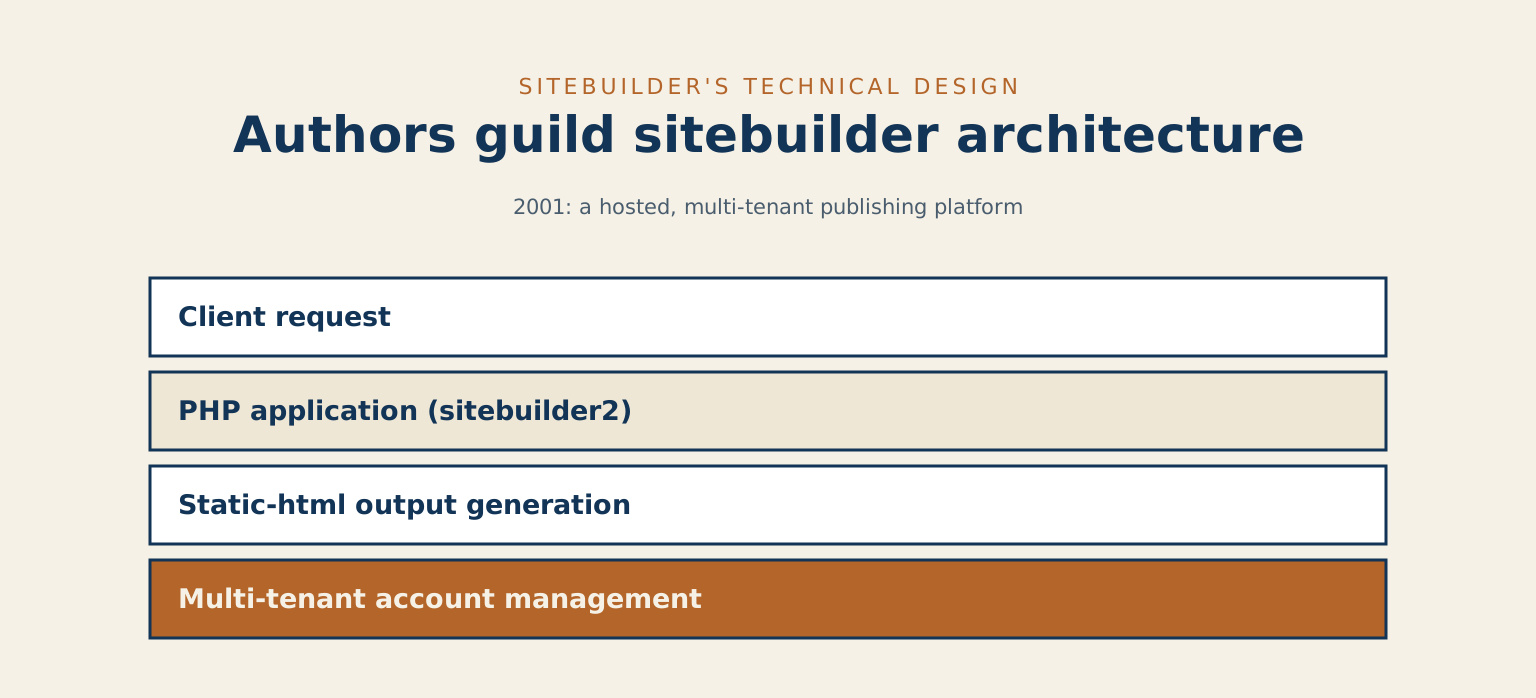
What Rodonic built
The first version of the service launched in ColdFusion in late 2001. Rodonic was brought in for the PHP rebuild, operational by November 2002 under the codename sitebuilder2. The PHP version was the one that ran for the next fifteen years. The credit “SiteBuilder created by Rodonic Corporation” appears in the footer of every captured page from that era forward, archived in the Wayback Machine and recoverable today. Design partner StarQuest Media owned the visual system; Rodonic owned the application.
The application had to do real work at scale. Multi-tenant account management. A theme system with named themes (adeptor, nebula, officina, parchment, shrift, and others) and configurable palettes. Static-HTML output generation per member site, written to disk at edit time rather than rendered on every visit, a 2002 architectural choice that anticipated the static-site-generator pattern that became fashionable a decade later. Image upload with server-side resizing into multiple display sizes. Search engine submission tooling for Google®, DMOZ, Yahoo!®, and Northern Light. Real credit card billing through the Guild’s existing membership infrastructure. A hit-tracker that assigned a sequential page Instructional design (ID) to every member page (the captured IDs reach into the ten-thousands).
- Client: The Authors Guild, New York
- Platform: PHP, hosted multi-tenant content management system, static-HTML output
- Period: PHP rewrite operational November 2002; service ran continuously through July 2017
- Built by: Rodonic Corporation (application), StarQuest Media (visual design)
The longevity argument
The service ran for approximately sixteen years. From a 2002 launch to its last archived capture in July 2017, paying members of one of the most prestigious writers’ organizations in the world depended on Rodonic’s PHP application to host their professional online presence. Sixteen years of continuous operation for a custom application is itself a deliverable: the architecture had to be the kind that the Guild’s IT contractors could maintain through more than a decade of PHP version upgrades, hosting moves, and editorial changes without rewriting from scratch.
A longer case study with the full architecture story, the recovered visual record, and a list of the verified member authors whose pages survive in the Internet Archive is published in the full case study.