Le Château: Moodle-driven staff training (2016-2020)
Moodle rollout across multiple retail locations for Le Château between 2016 and 2020, organized by role, tied to real store conditions, with a centralized update workflow that pushed changes to all sites at once. The brief wasn't a platform question; it was a fit question.
Between 2016 and 2020, I designed and rolled out a Moodle training system for Le Château, the Canadian fashion retailer that operated hundreds of stores at its peak.
The brief: train across stores without breaking the work
Retail training has a structural problem: the people who need it most are the people least able to stop working to receive it. A sales associate with a mid-shift schedule, a supervisor covering two floors, a store manager handling a Friday delivery: none of them have a training block carved into the calendar. The system had to fit around real retail work, not ask retail workers to fit around the system.
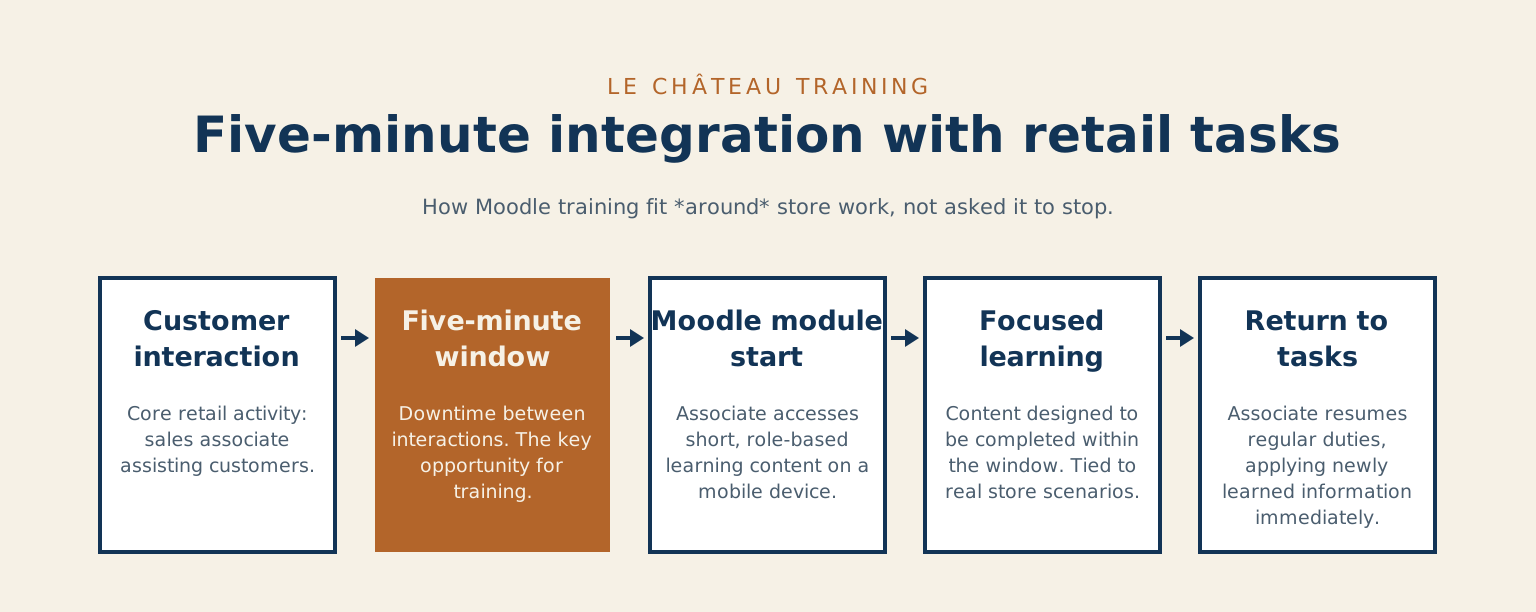
Moodle was the platform. The configuration was the deliverable: role-based learning paths, mobile-accessible content, a centralized update workflow that could push changes across locations simultaneously. What I was actually building was a system that could be completed in five-minute windows between customer interactions, not one that assumed a dedicated learning hour.
Role-based architecture
The system organized training by role, not by topic. That distinction matters more than it sounds. A topic-organized LMS hands a new associate a list of modules with names like "Customer Service," "Visual Merchandising," and "Loss Prevention" and asks them to find the right starting point. A role-organized system knows they are a new associate and shows them the onboarding path, in order, sized to complete within their first week, with clear progression signals so they can see where they are and what comes next.
New associates followed a structured onboarding sequence tied to their first days on the floor. Safety training was required across all roles, built from day-to-day store scenarios rather than generic compliance text, so the training matched the actual risk landscape of a retail environment. Supervisors and store managers had separate management modules covering coaching conversations, inventory accountability, and the operating standards that differ at leadership level from front-line work.
Centralized update workflow
A multi-location training system that requires an IT ticket to update content is a system that never gets updated. The Le Château setup was built so that changes to a policy, a product line, or a store procedure could be published once and rolled out across every location where the affected module was assigned. Store managers could see completion progress for their team. The central team could see completion patterns across locations and identify where a module was consistently unfinished: a signal that the module itself needed redesign, not that the employees were failing.
Stack and context
- Platform: Moodle LMS
- Architecture: Role-based learning paths for new associates, all-staff safety training, supervisor and manager modules
- Deployment: Multi-location rollout with centralized update workflow and per-store progress visibility
- Period: 2016–2020
Le Château ceased retail operations in 2020, closing all Canadian stores following CCAA proceedings during the pandemic. The training system ran the full life of the engagement, from initial rollout through the final years of store operations.