The public-facing portal where Canadians signed up for Bell’s Sympatico internet service and ordered their modem. Built directly with Bell in 2003, no agency intermediary.
Bell Sympatico was Bell Canada’s consumer internet brand and, in 2003, one of the country’s two dominant ISPs. The Sympatico service, DSL internet and dial-up across residential Canada, had millions of subscribers. Bell needed to move the customer-facing signup flow and equipment ordering onto the web without touching the Java back-end infrastructure that already handled provisioning, billing, and hardware dispatch. The brief was precise: new front end, existing back end, bridge between them.
The constraint the brief imposed
Enterprise Java back-end systems in 2003 were not designed to be called directly from a browser. They were built for server-to-server communication: thick-client applications, internal tools, provisioning software that ran on Windows workstations at Bell retail locations. Exposing that back end to a web form submitted by a residential customer was a different shape of problem: session management, error-state handling, and a user experience that had to read as simple while the system beneath it was not.
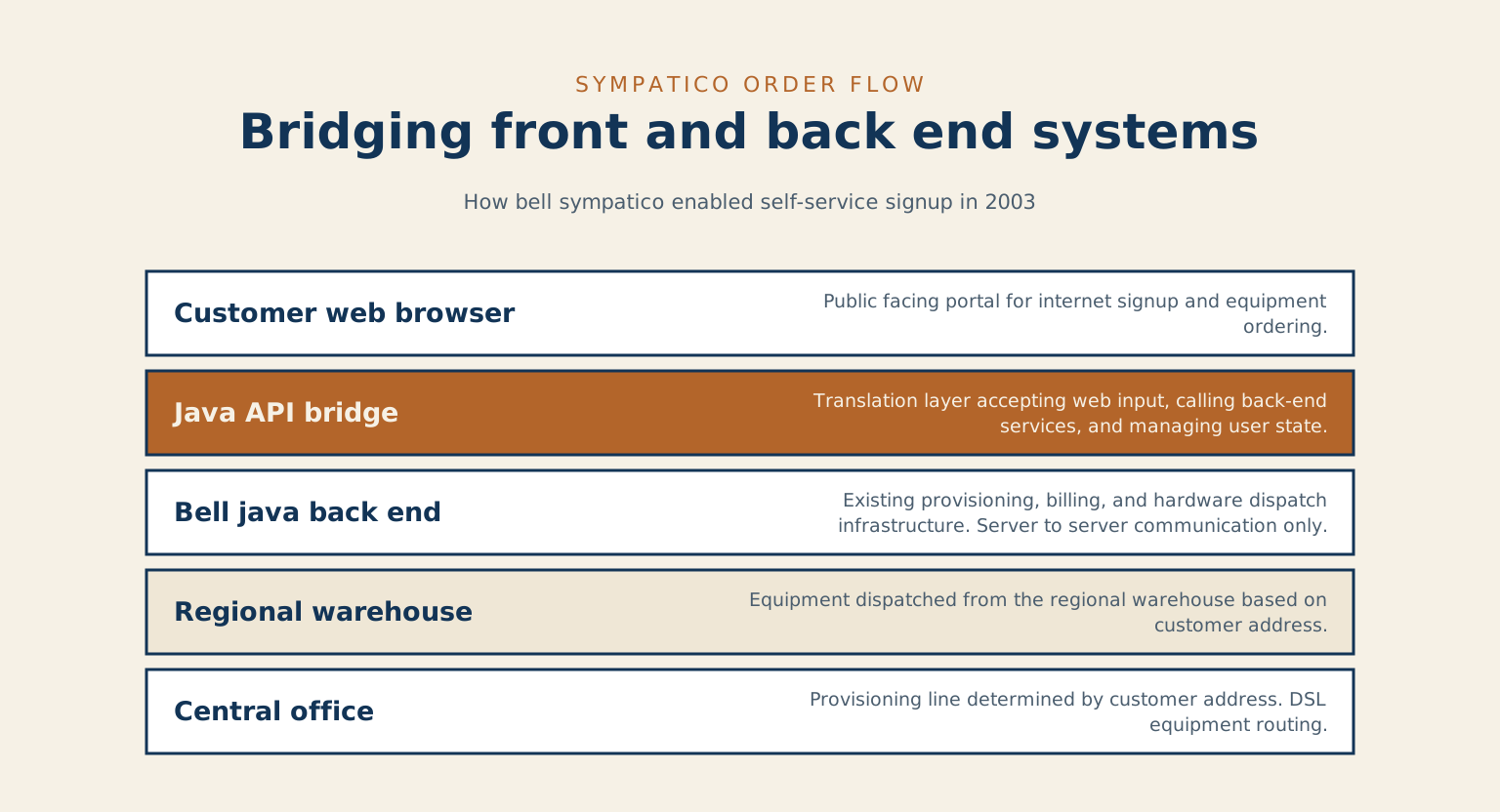
The answer was a Java API bridge: a translation layer I built between the new web front end and the existing back-end services. The legacy infrastructure stayed intact and unchanged. The API bridge handled the translation: accepting input from the web form, calling the appropriate back-end service, interpreting the response, and returning the right user-facing state to the browser. From the customer’s view, they filled in a form and received confirmation. From the back end’s view, a trusted internal caller had submitted a provisioning request through the standard API. Neither side needed to know what the other looked like.
What the public-facing side had to do
The customer-facing interface had to accomplish several things simultaneously. It had to collect enough information to provision the service: the customer’s address (which determined which DSL equipment they would receive and which central office would provision their line), their account information, and their equipment preference from the available modem hardware at the time. It had to validate inputs before hitting the back end, because a round-trip to a Java service for a missing postal code is an unnecessary latency hit. And it had to handle the failure modes gracefully. A provisioning system that serves millions of residential customers has edge cases: addresses not yet in the DSL footprint, equipment out of stock at the regional warehouse, account conflicts the back end would surface.
The result was a self-serve signup and equipment ordering flow that could absorb real residential volume: people who had seen a Sympatico advertisement and arrived at the site to sign up, not technical users who understood provisioning timelines. The brief asked for the web layer that Bell’s sales channel needed to scale.
Stack and context
- Customer-facing layer: Web-based signup and equipment ordering flow, browser-submitted, public-facing
- Integration layer: Java API bridge connecting web front end to Bell’s existing Java provisioning back end
- Client: Bell Canada, direct engagement, no agency intermediary
- Period: 2003
Bell Sympatico was eventually folded into Bell’s broader internet brand, and the Sympatico domain eventually pointed to a Yahoo-powered portal before being retired. The infrastructure that handled residential internet signups in Canada in the early broadband era passed through several generations of front-end work. This was one layer of that.