Training a newsroom on WordPress in two days: the curriculum that survives turnover
Two days, the right two days, and a curriculum the next hire inherits. This is for editorial ops leads at media organizations where reporters cycle through every 12 to 24 months.
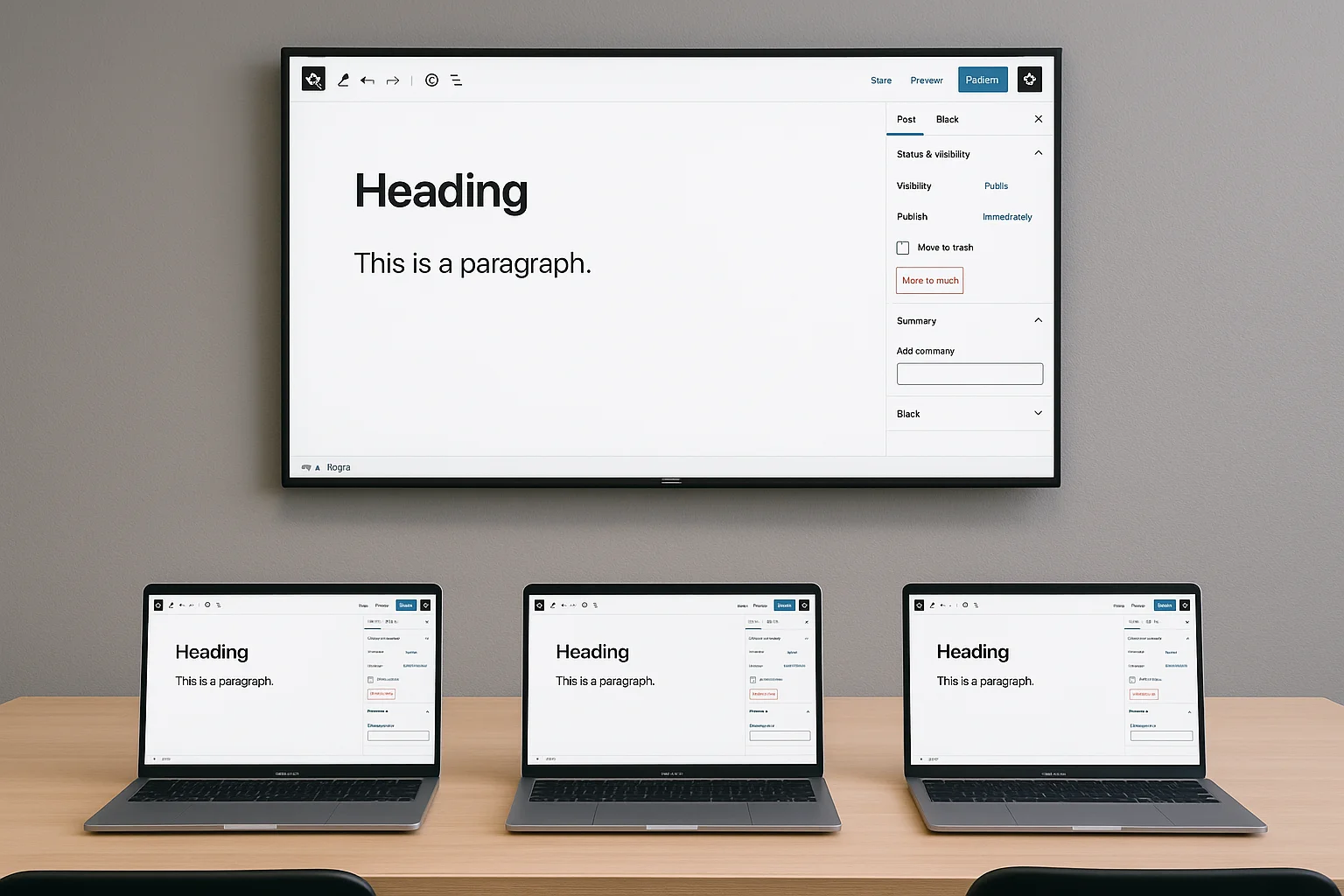
A newsroom I trained had a reporter who could file a polished feature in their old system in roughly four minutes flat. Muscle memory, built over years. Put that same reporter in front of a new WordPress editor on day one and the four minutes became forty, and you could watch the frustration land on their face in real time. That gap, between what someone can do on the old instrument and what they can do on the new one, is the entire problem a newsroom training has to close: can they still file under deadline when the building is on fire, the way they always could.
If your newsroom has zero staff turnover, close this tab. This is for editorial ops leads at media organizations where reporters cycle through every 12 to 24 months, where the person you train in March has handed the desk to someone new by the following spring, and where “we’ll just show the new hire how it works” quietly becomes a six-week tax you pay with each new hire.
The short version:
- Two days is the honest amount of training, and three is more than a newsroom can give.
- Day one earns same-day fluency: one reporter files a real story under a clock.
- Day two earns the shared workflow: roles, review, the asset library, and the archive.
- Three things get left behind so the next hire is trained without me: a per-role checklist, a screen-recorded walkthrough, and a quarterly refresh.
Why two days, and why three is too many
Newsrooms cannot give you three days. They can barely give you two, because the news does not stop while people sit in a room learning software. So the question becomes “what is the smallest amount of teaching that lets someone do the job.”
That gap, between what someone can do on the old instrument and what they can do on the new one, is the entire problem a newsroom training has to close.
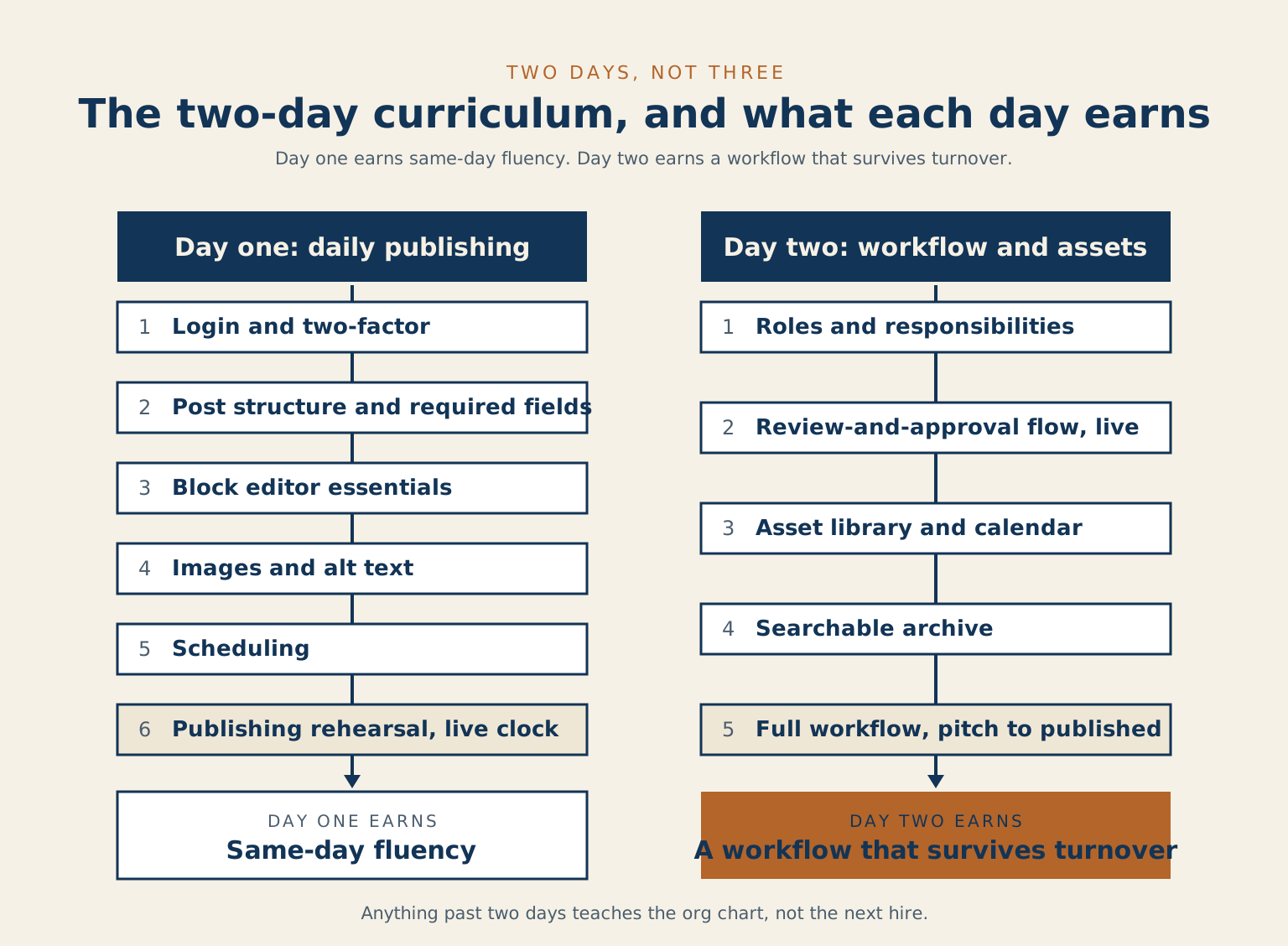
Two days is the honest answer. Day one is the daily-publishing path: everything a reporter touches to get a story live. Day two is the workflow and the asset library: everything that happens around the story so the newsroom runs as a team rather than a pile of individuals. Anything past two days is over-engineered for a room where the people will turn over before they ever use the advanced features. You would be teaching the org chart instead of the next hire.
Day one: daily publishing
Day one is narrow on purpose. Login and the two-factor dance. Post structure: title, deck, body, byline, the fields your house style requires rather than the forty fields the system technically offers. Block editor essentials, which for a reporter means about six blocks out of the whole library. Image uploading and alt text, and yes, I make alt text a day-one item, because a newsroom that treats it as optional learns otherwise from an accessibility complaint. Scheduling. Then the part that matters more than all of it combined: the publishing rehearsal.
By the end of day one, every trainee publishes a real story. A real story with a real headline and real art, tagged the way the desk tags things, going live to a staging environment that behaves exactly like production, on a clock. I give them a wire item and a deadline and I make them file it the way they would on a Tuesday. The point is to find the place where their hands hesitate while the stakes are still pretend. A reporter who has published one real story under a clock walks out of day one knowing they can do the job. A reporter who watched a demo walks out hoping they can.
The point is to find the place where their hands hesitate while the stakes are still pretend.
Day two: workflow and assets
Day one makes one person dangerous. Day two makes the room work together.
Roles and responsibilities first: who can publish, who can only submit for review, who owns the homepage, who can touch the photo library. Then the review-and-approval flow, run live: a reporter submits, an editor opens it, sends it back with a change, the reporter fixes it, the editor publishes. Then the asset library and the editorial calendar, because a photo nobody can find is a photo nobody used, and a calendar nobody updates is a Slack thread with extra steps. Last, the searchable archive, meaning how to find what the newsroom already published, which is how you stop reporters from rewriting a piece the paper ran eighteen months ago.
The day-two exercise is a complete two-person workflow. Two trainees, one story, all the way from pitch to published, swapping the reporter and editor seats so each person has sat in both. Same staging environment as day one, same clock: just two people in the room instead of twelve. When they can do that without me in the room, day two is done.
What makes the curriculum survive turnover
Here is the part that actually saves the money, and it is the part most training skips. The training is not the deliverable. The training is the event that produces the deliverable.
So I leave three things behind. A one-page checklist per role, written so plainly that a new hire can follow it on their first morning without anyone hovering. A short screen-recorded walkthrough of the day-one publishing path, archived where the next person will find it, somewhere better than an email from two years ago. And a quarterly refresh session, thirty minutes, that catches the drift before it sets, because every newsroom invents little workarounds and half of them are bad habits.
Think of it like a recipe card taped inside a kitchen cupboard. The chef who wrote it can move on, and the next cook still makes the dish the same way, because the knowledge lives on the card and stays in the kitchen after the chef has gone.
Three-year money
Run the math over the life that matters, which is three years, because that is how long until the room has fully turned over.
A cohort costs $6,000 to $9,000 to deliver: a two-day on-site engagement for up to twelve staff with all materials included. Documentation upkeep runs about $1,000 a year, keeping the checklists and the video current as WordPress and your house style change. Call it roughly $10,000 to $12,000 across three years for a newsroom that stays trained no matter who walks in the door.
The cost of skipping it
Now the other column. Skip the training, and every new reporter teaches themselves by trial and error while the desk absorbs their mistakes. That ramp can run around six weeks before someone is genuinely fast in the system, against the two days a real curriculum costs. A newsroom that hires four or five reporters over three years is paying that six-week tax four or five times: slower publishing, editor hours spent fixing avoidable errors, and the front-page mistakes a brand-new reporter makes when they are still fighting the tool instead of the story. The training is not the expensive line. The thing the training replaces is.
- Up front: With the curriculum: One two-day cohort, $6,000 to $9,000, up to twelve staff; Without it: Nothing on the invoice
- Ongoing: With the curriculum: About $1,000 a year to keep the checklists and video current; Without it: A six-week ramp for every new hire, absorbed by the desk
- Total: With the curriculum: Roughly $10,000 to $12,000; Without it: Four or five ramps in slow publishing, editor hours, and front-page mistakes
Same three years, priced both ways. The empty invoice on the right is the expensive column.
Two Canadian rules that get skipped
Two things reliably get skipped in every training conversation, and both become someone’s crisis the week of the switchover, exactly when the turnover pressure is highest.
Canadian Press style is one. A news property in Canada runs on CP style for accuracy and consistency, and if your training teaches the buttons but skips how the house style maps onto the system’s fields, you have trained people to publish quickly and wrongly. I build the style rules into the day-one post structure so the right way is the easy way.
Provincial labour standards on paid training hours for unionized staff is the other. In Ontario, training your employer requires counts as work time, and in a unionized newsroom that comes with scheduling and pay consequences you cannot discover the week of. I build the two-day shape around that constraint from the start.
Common questions about newsroom WordPress training
How long does newsroom WordPress training take, and why two days? Two days. Day one is the daily-publishing path each reporter needs to get a story live, and day two is the shared workflow and asset library. It is the training end of the work I do for publishers.
What keeps the training working after reporters turn over? The curriculum leaves three things behind, a one-page checklist per role, a screen-recorded walkthrough of the publishing path, and a quarterly refresh, so the next hire learns from the documents rather than from a colleague who has already left.
Do you train on the live site? No. Every trainee publishes a real story to a staging environment that behaves exactly like production, on a clock. If you want to talk through timing for a switchover, the contact page is the place to start.
What I would refuse to do
I will not deliver newsroom training where the trainee never publishes a real story under live deadline conditions on day one. I learned why on a Canada Day launch, watching a team try to learn a new system while still putting out the news every single day.
Pick the two days early, while the old system is still running and nobody is counting down to the switch-off.
How long did your last new reporter take to get fast in the system, and who taught them?
If you are planning a WordPress transition this year and need newsroom staff trained before it goes live, I take a small number of engagements. Use the contact page to get in touch about timing. The planning side of the same problem is in how to hit a hard date on a newsroom migration.
References
Checked against the WordPress roles and capabilities documentation, the post status documentation and the Ontario guide to the Employment Standards Act, on 2026-10-11.