Tending thirty domains I’d half-forgotten I owned
A week spent tending the side domains I had half-forgotten I owned, meeting Claude's new model Fable on real work, and letting the system do the tireless digging while the judgment stayed with me.
A few weeks back I asked my overnight system for something that should have been dull: a list of every domain I own, with one line each on what it was for. I was expecting an inventory. What came back was closer to an argument I had been having with myself without knowing it. One domain sat in the list described two completely different ways, in two different files, both written by me, some months apart. I owned the name. I had, apparently, forgotten what I meant it to become.
The week began, then, with a small confession: I had half-forgotten what some of my roughly thirty side domains even were. That is a humbling place to start, and an honest one, and it turned out to be the right one.
Tending instead of parking
For years those domains were a shelf of parked names. Bought for a reason, then left to sit. This week I taught my overnight system to treat them as a garden to tend rather than a shelf to store. Every night each one gets a small nudge toward its own growth, on its own terms, instead of gathering dust. Once a week the system steps back and checks whether any new domains have turned up that still need a plan, the way you would walk the beds in spring to see what came back and what needs planting.
One domain sat in the list described two completely different ways, in two different files, both written by me, some months apart.
The whole thing runs on a few different rhythms, some nightly, some weekly, and one that never really sleeps. The picture below lays them out better than a paragraph can.
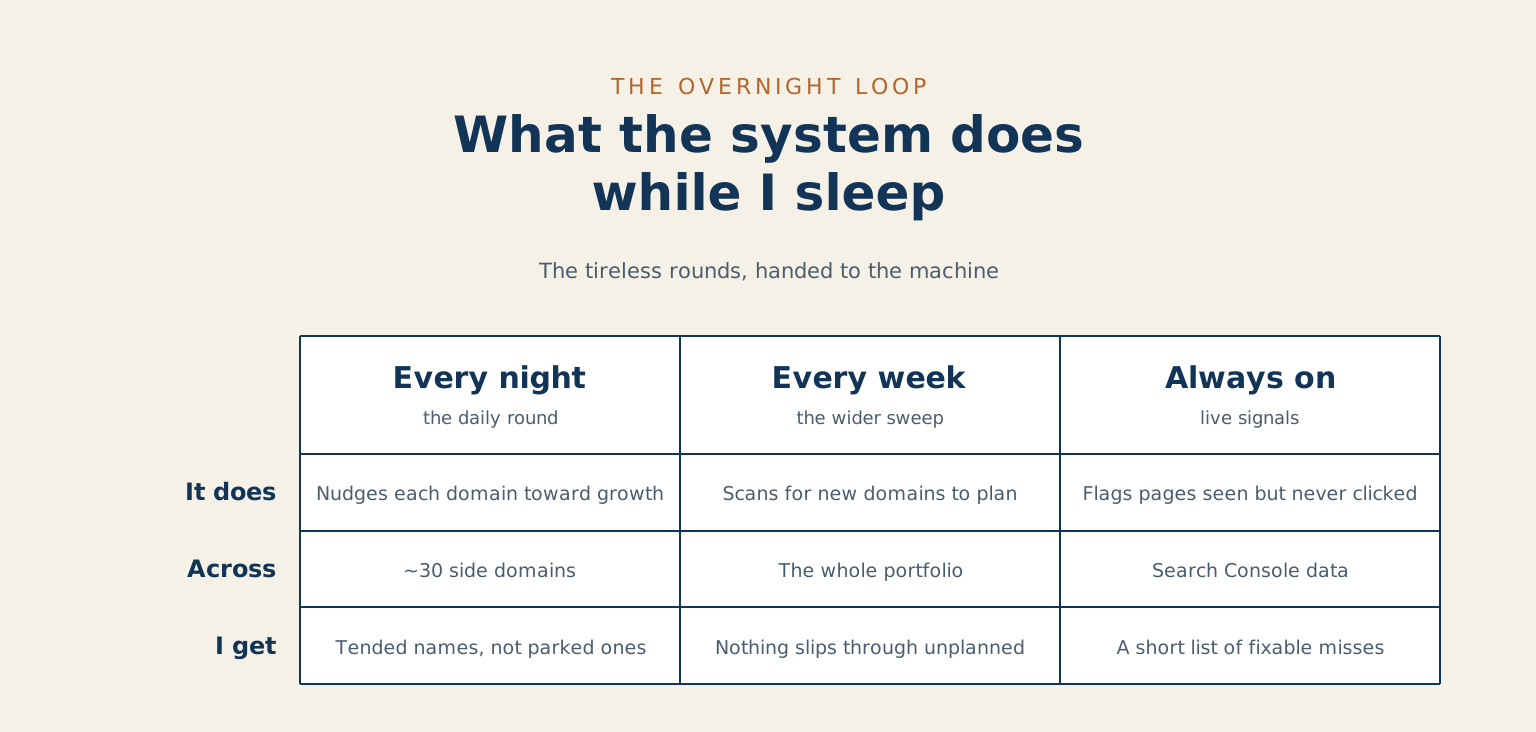
The machine is tireless and perfectly content to do the same boring rounds every single night. I am none of those things after about nine o’clock. So the boring rounds are precisely the work to hand it.
Wasted reach
One of the first genuinely useful things it dug up has a name I have started using out loud: wasted reach. The system reads my Google Search Console data and hunts for pages that show up in search results but that nobody actually clicks.
Here is a real one it surfaced. A page of mine sitting at roughly position 75 for a particular search. Seen 82 times. Clicked zero times. A page doing the whole job of showing up and getting nothing at all back for the trouble. Before this week that fact was buried in a dashboard I open maybe once a month, if the mood takes me. Now it sits on a short list I can actually work through, which is the difference between knowing a thing and being able to do something about it.
Learning a new model in the open
Part of the week went to getting to know Claude’s new model, Fable, on real work rather than on a demo. I handed it two bounded jobs straight from the queue: writing the search-result titles for a batch of posts, and re-checking each post against what a searcher is genuinely looking for.
What struck me was how little friction there was. The jobs were well specified, and the work came back in a shape I could use with a light edit rather than a rebuild. That is the honest way to meet a new tool: hand it something you already know how to judge and watch how it does. The announcement can wait.
The learning turned out to be less about the model than about me. A new model is only ever as good as the job you hand it, and a well-drawn job is the part you have to bring yourself. The clearer I was about what a good title or a real search intent looked like, the more I got back. The judgment about what good means stayed exactly where it was, with me. It just had a capable new pair of hands to put it to work.
The research, and the link I chose not to make
Most of what the system did this week was research. It read the search data, checked each post against real search intent, and mapped which of my pages should sensibly point to which. I keep the judgment about what any of it means and what to do next.
The value is that it surfaces the thing I would have found eventually, on a Tuesday night while I am asleep, and hands it to me in the morning as a list I can get through with a coffee.
Research also tells you what not to do, which is the part people tend to skip past. When it mapped the links between my pages, it flagged something I could easily have talked myself into. Cross-linking my thirty domains to one another would read to a search engine like someone quietly gaming the standings, even when the intent behind it is completely innocent. So I left those links unmade. Knowing which connections not to build is as much a part of the craft as knowing which ones to make, and it is the part that only shows up when you go looking.
That is the shape of the week, and honestly the shape of how I want to work with these tools at all. The tireless tending and digging is exactly the work to hand a machine. The judgment about what to grow, and what to leave well alone, stays with a person. And tending what you own starts with the unglamorous step of knowing what it is. My records, at least, now agree with one another.