How to sell online courses with WordPress (complete system)
I build learning platforms for a living and I teach on them, so I get asked one question at every workshop and most dinner tables: how do I actually sell a course online? The honest answer disappoints people at first, because they came hoping for a growth hack and what I hand them is a system with four decisions in it, and the order of those decisions matters more than the software.
The short version:
- Start with one sentence: after this course, the learner can do X. Build the outline backwards from that.
- Own your platform. WordPress, an LMS plugin, and a checkout mean no marketplace rents your audience back to you.
- One honest price on the page, and everyone pays it.
- Teach in the open first, then sell the organized version to people who already trust you.
- The technology is a weekend. The promise and the outline are the real work, along with the pricing.
Start with the promise
A course is not a pile of topics, it's a promise about a Monday. The buyer finishes your course and does something differently at work the following week, or she doesn't, and everything about whether she recommends it and buys the next one hangs on that. So before touching software, write one sentence: after this course, the learner will be able to do X. If X is vague, no funnel will save it. When I compressed a newsroom's WordPress training into two days, the whole curriculum got built backwards from what reporters had to do on deadline, and that same backwards design is what separates courses that get finished from courses that get refunded.
A course is not a pile of topics, it's a promise about a Monday.
Teachers call this backward design, and Wiggins and McTighe wrote it up in Understanding by Design. The Kirkpatrick model's Level 3 asks the same question from the other end: whether the participant applies the learning back in their own environment.
The stack, in plain terms
You can sell a course on a marketplace platform and rent your audience, or you can sell it on your own WordPress site and own the whole relationship. I build on WordPress because the economics are simply better once you're serious. The stack is three pieces. WordPress is the storefront and the brand. An LMS plugin handles lessons, quizzes, progress, and certificates, and LearnDash is the one I have deployed for clients. A commerce layer, usually WooCommerce or a simple checkout plugin, takes the money and hands out access. Each piece is replaceable, nothing rents your customer list back to you, and the platform fee on a $400 course is zero.
What the fees look like
A marketplace is a different deal. Udemy's instructor revenue share pays an instructor 37 percent of the revenue on a sale the marketplace brought in, and 97 percent when the student arrives through the instructor's own coupon or link. Hosted course platforms charge too: Teachable's pricing page lists a 7.5 percent transaction fee on its $39 a month Starter plan and none on its $89 a month Builder plan. Your own site has no platform fee, but your card processor still charges one, and Stripe lists 2.9% + CA$0.30 per successful transaction for domestic cards in Canada.
- Who owns the audience: Marketplace platform: The marketplace rents it back to you; Your own WordPress site: You do, including the email list
- Fee on a $400 sale: Marketplace platform: Set by the marketplace, and Udemy pays the instructor 37% of a sale it sourced; Your own WordPress site: Zero platform fee, plus card processing
- Swapping out a piece: Marketplace platform: You move the whole course; Your own WordPress site: Each piece is replaceable on its own
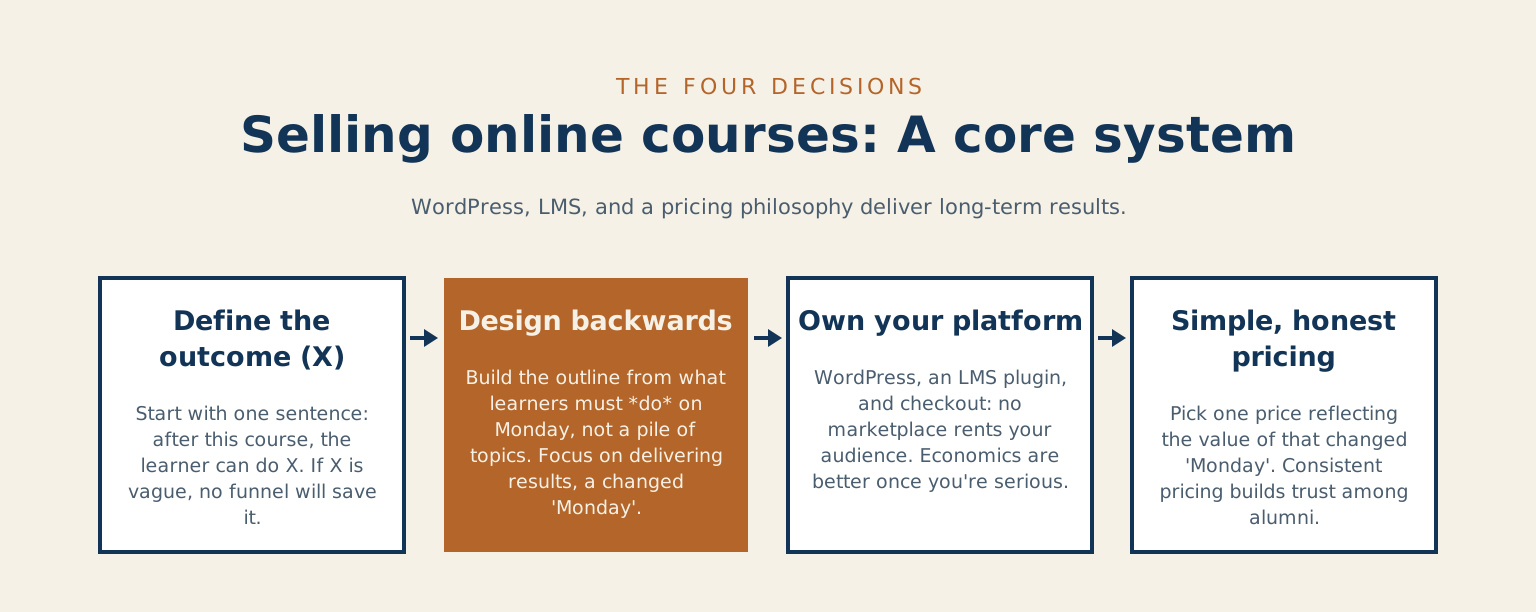
The part nobody tells you: the technology is a weekend. The promise and the outline are the real work, along with the pricing, which is why the platform decision should be the boring one.
Price it like a professional
My prices are public everywhere else and my course advice follows the same instinct: pick a real number and put it on the page, then skip the launch theatrics entirely. Courses priced under lunch money attract buyers who never log in; courses priced like the professional development they are attract people who show up and finish. If your course genuinely changes somebody's Monday, price it against the value of that Monday, and leave the app-store reflex out of it. And keep one price for everyone, because your alumni talk to each other, and nothing curdles goodwill like discovering the seat next to you cost half as much.
Sell it the way you'd want to be sold to
The funnel that works long-term is the one that teaches before it asks. Publish the real lessons in the open: posts, a free sample module, and honest answers to the questions your course covers, in whatever order you have them. The course then becomes the organized and guided version of what you've already proven you know, with somebody keeping you accountable. People buy the organization and the outcome, and they buy it without being chased by a countdown timer.
The free sample module earns you the other quiet asset in this system, an email list of people who chose to hear from you, and a short note to that list whenever a course opens will outsell any ads budget a small operation can afford. It's slower to build and it never stops working, which describes most things worth owning. That's the core of what my learning-platform work comes down to when a client asks me to build them a course business: the tech takes a week, and the trust takes a body of work, so start the body of work first.
The four decisions, in order
Four decisions: promise, stack, price, and a funnel that teaches first. Get them right in that order and the complete system is exactly as boring, and exactly as durable, as a good business should be.
What was the last online course you paid for and finished, and what got you to the end?
Common questions about selling online courses
Do I need a marketplace to sell a course? No. You can sell on your own WordPress site with an LMS plugin and a checkout, keep the whole customer relationship, and pay no platform fee on the sale. I have written up what that looked like for a manufacturer training its distributor network, if you want to see the shape of a real one. If you want a hand wiring it together, that is what my learning-platform work is for, and you can reach me here.
Should I build the course or the audience first? Start the body of work first. The technology takes about a week, but the trust takes a run of published posts and honest answers, so begin publishing before you build the checkout.
How should I price it? Pick one real number that reflects the professional development the course delivers, and put it on the page at the same price for everyone.
Checked against the Udemy revenue share page, the Teachable pricing page and the Stripe pricing page, on 2026-10-11.