RCC Institute of Technology, the former Radio College of Canada, founded in 1928, was one of the oldest private technology colleges in the country, teaching programs in electronics, information technology, and applied technology trades. By the late 2000s it carried both a long institutional history and the more recent task of serving prospects who were choosing between a traditional college, a polytechnic, and the trades-and-technology niche RCC actually occupied.
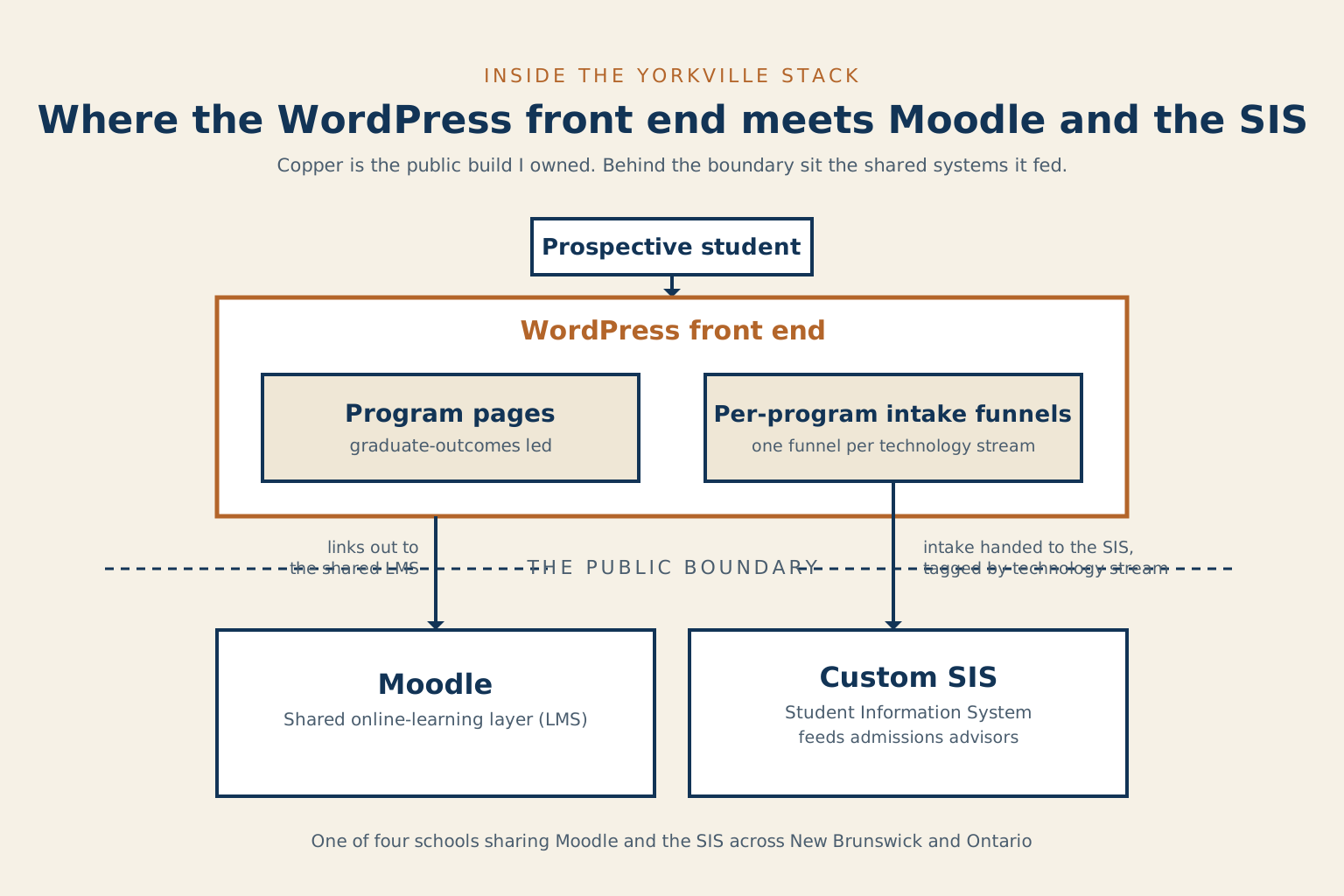
This was the WordPress front-end build for RCC during the Yorkville education group’s late-2000s technology integration. It sat on the same Moodle online-learning layer and the same custom Student Information System that served the group’s four schools across New Brunswick and Ontario. The companion portfolio entry for Yorkville University describes that broader architecture.
A front end that had to earn the long history
An institution that has been training Canadian technologists since 1928 is in a different position from a startup college trying to claim a place in the market. The front end had to read as serious about its lineage without feeling stuck in it: current in what it taught, current in how the prospective student experienced the site, but visibly grounded in a tradition the newer competition didn’t have. Program pages led with what graduates went on to do, because the trades-and-technology prospect tends to evaluate a college by where its graduates work rather than by how its brochure is laid out.
Per-program intake funnels handed cleanly into the custom SIS, so an admissions advisor could pick up the conversation already knowing which technology stream the prospect had been reading about. The publishing rhythm and the admin patterns matched the other three schools in the group, so a marketing or admissions coordinator could move between sites and find the controls where they expected them. A prospect reading the electronics-program page never had to think about the platform underneath, which is what an institutional site is for.
- Platform: WordPress, custom theme
- Period: 2008–2009, during the Yorkville group’s integrated technology build
- Role: Director of Technology, Yorkville University, leading the technology team responsible for all four schools’ digital surfaces
- Context: One of four institutions sharing a Moodle LMS and a custom Student Information System across two provinces
Where this pattern transfers
Any heritage-institution college: trades, technology, applied sciences, agriculture, has a similar buyer task. The website has to honour the lineage without becoming a museum piece, and it has to make the graduate-outcomes case directly because that is the case the prospect is actually evaluating. Whether the records system feeding admissions is unique to the institution or shared with a sister college matters far less than whether the front-end story matches what the prospect’s career-changer ear is listening for.