stances
WordPress is rarely the wrong tool. The question is usually about the developer.
WordPress is the right tool for almost every project someone brings me. The question isn't usually about the tool. It's about the developer.
Asking "when is WordPress wrong" is like asking "when is a Fender the wrong guitar." The honest answer is almost never. The question is what you're trying to play, who's playing it, and whether they know how to use the instrument. The trendy default is "use Next.js, go headless, build a custom thing in TypeScript." That produces sites that look modern at launch and become un-maintainable in three years, when the team that built them has moved on.
What I do
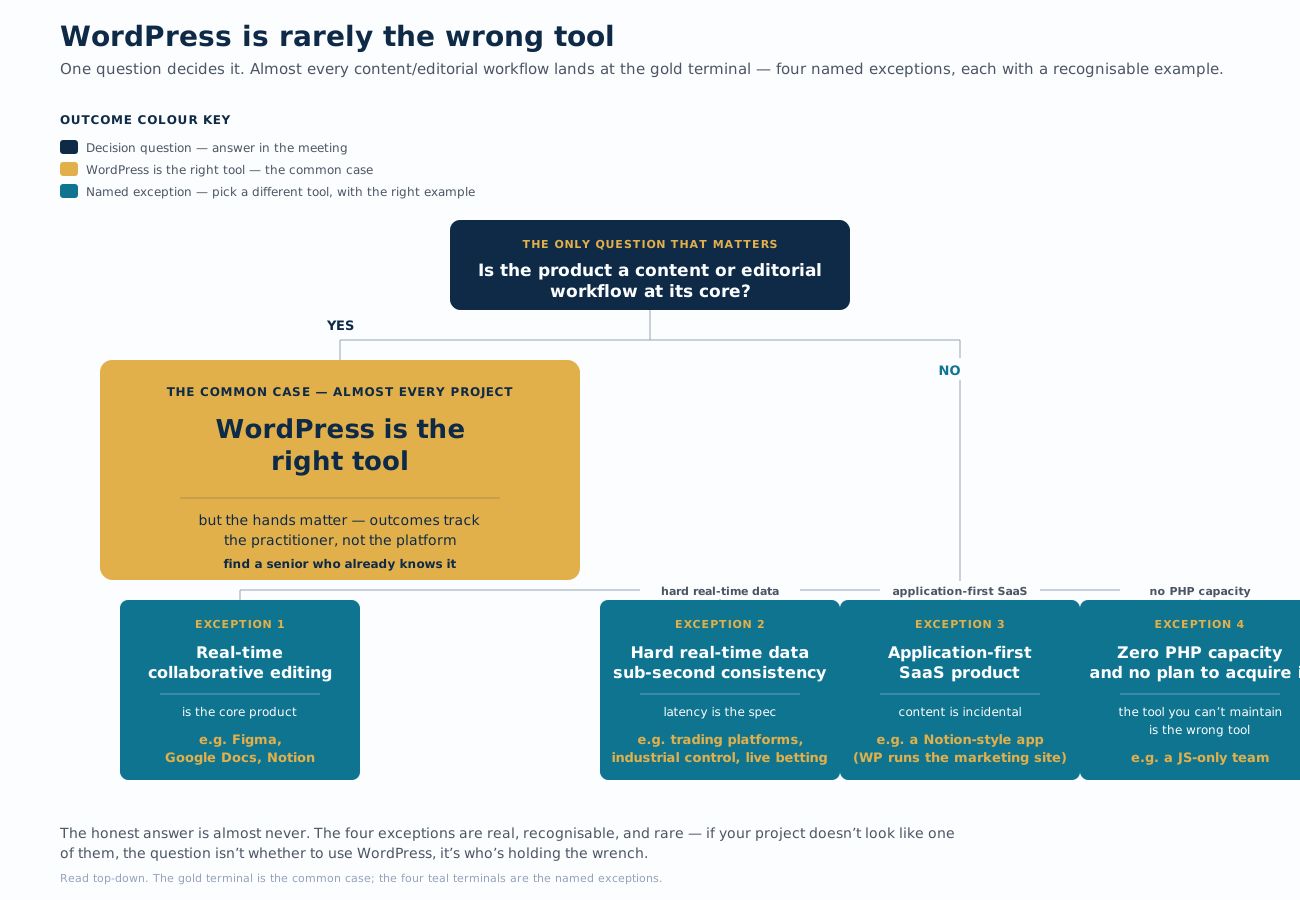 Decision diagram. One root question: is the product a content or editorial workflow at its core? YES leads to a single large gold terminal: WordPress is the right tool, with the caveat that the hands matter and you should find a senior practitioner. NO leads to four muted-teal exception terminals: real-time collaborative editing (Figma, Google Docs, Notion); hard real-time data with sub-second consistency (trading platforms, industrial control, live betting); application-first SaaS where content is incidental (Notion-style app, with WordPress running the marketing site); and zero PHP capacity with no plan to acquire it (a JS-only team). The gold terminal is visually larger than any single exception, holding the page's stance that WordPress is almost always the right tool.
- Treat WordPress as a serious platform that runs more than a third of the web for reasons. Not as a beginner tool, not as a compromise, not as something you graduate from.
- Pressure-test the project shape against what WordPress actually does well: structured content, editorial workflows, and long-term maintainability, the things that matter at years three and five, not just at launch.
- Recommend something else when WordPress genuinely isn't the answer (see below). I'm not religious about the platform. I'm honest about it.
- Build WordPress sites that will outlive the trend cycle. Classic theme where it makes sense, FSE where it earns its keep, headless where there's a real reason, not as a fashion statement.
What I decline
- Reflexive "WP is for blogs" framing. It hasn't been true for fifteen years.
- Reflexive "use Next.js" recommendations. The frontend framework that's hot today is the technical debt of three years from now.
- Treating WordPress as a compromise the buyer should apologise for choosing.
- Building on WordPress when it clearly isn't the answer (see below). Loyalty to a platform isn't craft; it's tribalism.
Where WordPress actually is the wrong tool
Honest answer to the original question, even though I'd reframe it. WordPress is the wrong choice when:
- You need real-time collaborative editing as the core product (Figma, Google Docs, Notion). WordPress isn't built for it and bolting it on produces a worse version of an existing product.
- You need a hard-realtime data layer with sub-second consistency requirements (financial trading, industrial control, live betting). WP can serve those interfaces but shouldn't be them.
- The product is an application, not content. A SaaS product where the content management is incidental and the application logic is everything. Build the app; if it has a marketing site or blog, that gets WordPress.
- The team has zero PHP capacity and won't acquire it. The tool you can't maintain is the wrong tool, regardless of what it is.
In every other case I've encountered, WordPress is the right answer and the question is whether the developer can use the instrument.
Why this is the position
Most "WordPress isn't the right tool" arguments are actually arguments about specific WordPress implementations the speaker has seen. Slow, plugin-stuffed agency-built WordPress is a real thing. So is the conclusion someone draws when that's their reference experience: WordPress doesn't work.
WordPress, used by someone who knows how to use it, works. The same way a Fender, played by someone who knows how to play it, works. The platform isn't the variable. The hands on it are.
See also
- Every plugin on your site is a roommate. On the developer-level judgement that decides whether the platform works in practice.
- I take rescue work. Always.. On why rescuing other people's WordPress builds is even possible. The platform is usually fine.