stances
$275/hr CAD. Same number for everyone.
A Niagara non-profit and a federal department see the same rate. So does a global media buyer and a local chamber member. The industry default is to charge what the market will bear, flex up for procurement and down for sympathy. I don't work that way.
What I do
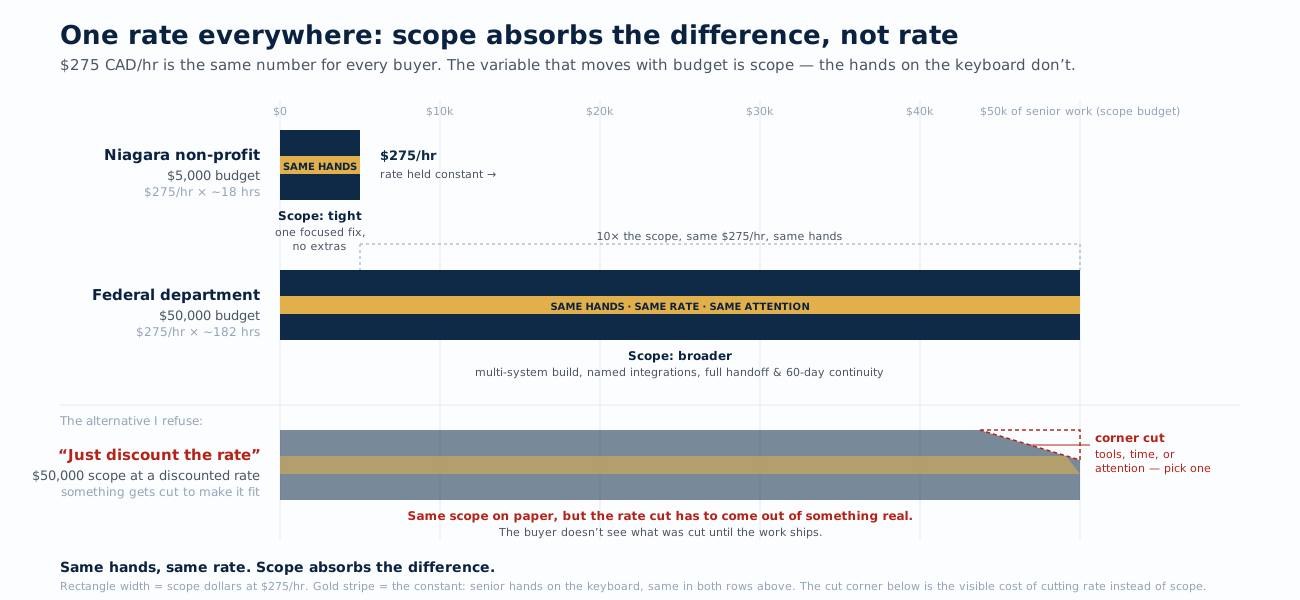 Three-row diagram. Row one: Niagara non-profit, $5,000 budget, narrow navy scope rectangle with a gold hands-on-the-keyboard stripe through it, labelled $275/hr times approximately 18 hours. Row two: federal department, $50,000 budget, scope rectangle ten times wider, identical height, identical gold hands stripe, identical $275/hr rate. Both rows show the same hands and the same rate; only scope width changes. Row three, separated and labelled the alternative I refuse: the same $50,000 scope rectangle with the upper-right corner literally cut off in muted red dashed outline, the gold hands stripe interrupted at the cut, captioned corner cut: tools, time, or attention, pick one.
- Quote the same hourly rate to every prospective client. $275 CAD, senior dev work.
- Adjust scope, not rate, when the budget is tight. A non-profit with $5,000 doesn't get a discount. They get a tighter scope that fits $5,000 of senior work, and they get the same hands on the keyboard.
- Make the rate visible. It's on the site, in proposals, in conversations. Buyers don't have to negotiate it because it isn't a negotiating position.
- Be honest about what the rate buys: senior judgement, the right tools, time to do it well, attention while I'm doing it.
What I decline
- Sliding scales based on perceived budget or industry sector.
- Lower rates for "exposure," "case study potential," or "future work."
- Padded enterprise rates that don't reflect actual cost or actual value.
- Negotiating the rate downward in exchange for vague upside.
- "What's your budget" as an opener. That question exists to discover the maximum the buyer will pay, which is the opposite of fair pricing.
Why this is the position
Everyone deserves my best. The rate is what guarantees the conditions for that best: the tools, the time to do it well, and the attention to care about the outcome. If I cut the rate for a sympathetic client, I cut one of those three. If I pad it for a corporate one, I'm pricing the procurement department, not the work.
Senior WordPress work isn't a commodity. The market is full of developers racing each other to the bottom on price, and it produces sites that work for two years until the first plugin update breaks them. $275/hr buys senior judgement that prevents that. It also buys the version of me that hasn't taken on six clients to make rent.
If a project's budget genuinely can't sustain senior-rate work, the answer is a smaller scope, not a smaller rate. Sometimes that scope is "audit and document, don't build." The next answer might be "advise the team you have." The honest one, occasionally, is "this isn't the right project for me, here's who I'd recommend." Those answers are honest. A discounted rate is a polite way of telling someone you'll do worse work for them than for someone else.
See also
- Delivery engagements are fixed price. The fixed-price side: same fairness principle, different commercial shape.
- Mentoring is part of how I live. On the work that lives outside the rate card.
- What a $275/hr consultant costs over three years. What the rate works out to as a three-year commitment, and when it doesn't.