
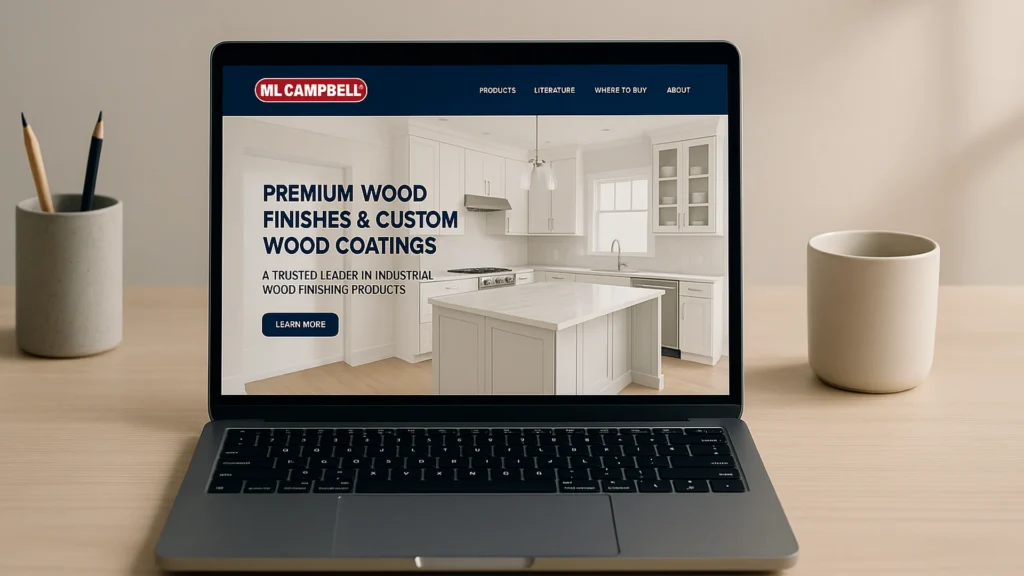
The M.L. Campbell site doesn’t sell anything. That one constraint reshaped every decision I made building it.
M.L. Campbell is a Sherwin-Williams industrial wood-coatings brand sold through a distributor network. A cabinet shop in Kitchener can’t buy a five-gallon pail of conversion varnish from the website. They buy it from the distributor twenty minutes down the road, who stocks it, knows what tints into what, and will answer the phone on a Tuesday afternoon when something’s gone sideways on a finishing line. The website’s job is to get the right product into the right finisher’s head, then hand them off to that distributor before they bounce to a competitor.
I run M.L. Campbell’s flagship Distributor Training Centre as my day job, so I came to this build already knowing the channel. I knew what a finisher asks before they pick a topcoat. I knew which spec sheet the shop foreman prints and tapes to the spray booth wall. That context did more for the IA than any call workshop could have.
Organize by the job, not the SKU
Finishers don’t shop by product name. They know they need a clear topcoat, or a wiping stain, or a vinyl sealer under a conversion varnish. So the product navigation is built around those categories first. The brand names and SKUs sit underneath, where someone who already knows “I want Krystal” can drill straight in, but where a newer finisher comparing options can browse the way they actually think about the work.
This sounds obvious. It is not what most manufacturer sites do. Most are organized by the internal product-line structure of the company, which is convenient for the marketing team and useless for the buyer.
Product pages are spec sheets
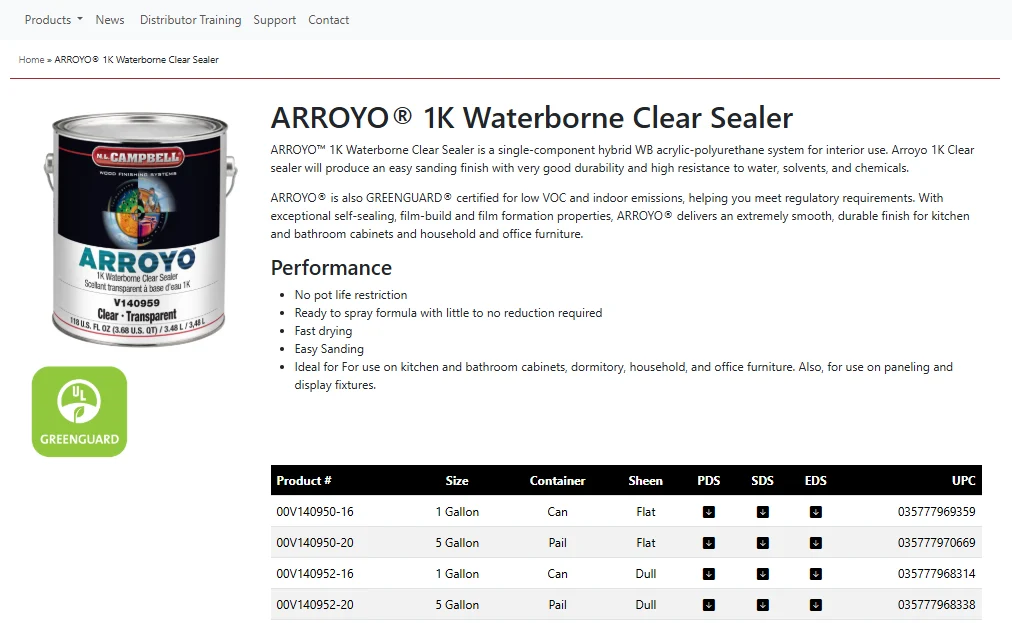
For a finisher evaluating a coating, the Product Data Sheet, Safety Data Sheet, and Environmental Data Sheet are not “resources.” They are the page. The PDS tells them whether it’ll spray through their gun, what the dry times are, what it can be recoated with. The SDS goes to the safety binder. The EDS goes to the LEED submittal or the architect.
So I put the download table directly on the product page, beside the can shot and the performance bullets. No accordion. No tab. No “click here for resources.” If the GREENGUARD certification matters for a school job, the badge is right there next to the name.
The locator is the buy button
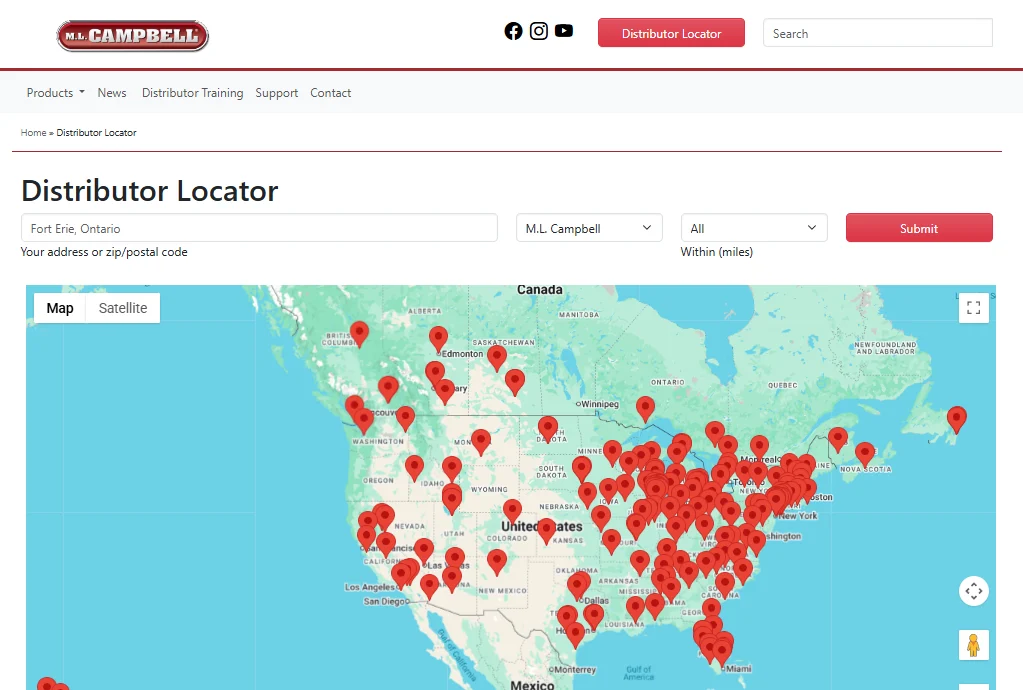
Every product page funnels to one place: the distributor locator. That is the conversion event for this site. Not a form fill, not a newsletter signup. a buyer punching in their postal code and getting the address of someone who can hand them a five-gallon pail tomorrow morning.
So the locator gets treated like a checkout. Fast, clean, no friction, no requirement to give up an email to see results. Distributor records carry the data a real buyer needs: phone number, address, what product lines they stock, whether they have a colour-matching lab on-site.
What transfers
The pattern here is not specific to wood coatings. any business where the website qualifies a buyer but doesn’t close the sale runs on the same architecture. Regulated industries where the spec sheet is the sales tool. Professional equipment sold through dealers. anything channel-distributed where the closing happens in a phone call or a showroom.
The mistake I see on those sites is treating them like consumer e-commerce that happens to lack a cart. That’s backwards. The job is to make the buyer confident enough to walk into the dealer already knowing what they want, then put the dealer’s address one click away. Build for that, and the rest of the site falls into place.
Read next
- Sayerlack. Sister brand to M.L. Campbell — same distributor-channel job, different chemistry and European heritage.
- M.L. Campbell Distributor Training Centre. The LMS that runs alongside the public site, where distributors and finishers learn the product line.
- Postmedia WordPress VIP Migration. How the same multi-property pattern scales to eleven national newspapers on one parent theme.
