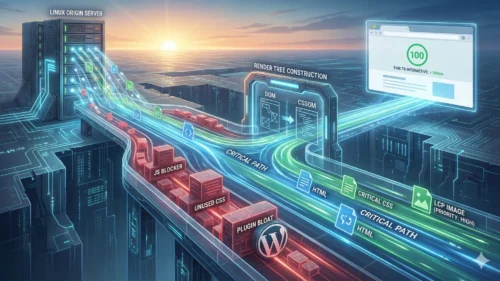
The Cult of the Green Circle: Why Your Lighthouse Score is Lying to You
An authoritative guide to critical rendering performance. We dissect the WordPress tax, tune Linux kernels, and rebuild the…
Lazy Loading is a technical performance optimization where non-critical assets—such as images and videos—are only loaded when they are about to enter the user’s viewport (the visible part of the screen). Instead of forcing the browser to download every image on a long “Pillar Content” page all at once, lazy loading defers the data transfer. This significantly reduces “Initial Paint” times and “Page Weight,” ensuring your site feels instantaneous even on slower mobile data connections.
For a high-end Digital Architect, lazy loading is a primary tool for passing “Core Web Vitals.” It directly improves your “Largest Contentful Paint” (LCP) score by prioritizing the content the user sees first. However, it must be implemented carefully: you should never lazy load your “Above the Fold” hero images, as this can actually hurt performance. A professional developer uses “Asset Dequeuing” and modern browser APIs to ensure that lazy loading is smart, smooth, and “Frictionless” for the user.
In 2025, native lazy loading is the standard for high-authority WordPress sites. It reduces “Server Strain” and wastes less data for your visitors, which is a key part of “Search Experience Optimization” (SXO). By architecting your site to load only what is needed, you build a “Zero Bloat” environment that search engines favor. It is a technical strategy that proves you value the user’s resources and time, reinforcing your “Authoritativeness” and commitment to an elite user experience.
An authoritative guide to critical rendering performance. We dissect the WordPress tax, tune Linux kernels, and rebuild the…
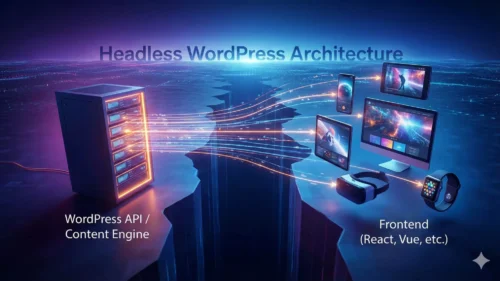
Discover why "Technical Debt" is stalling your growth and how Headless WordPress provides the scalable, high-performance solution for…