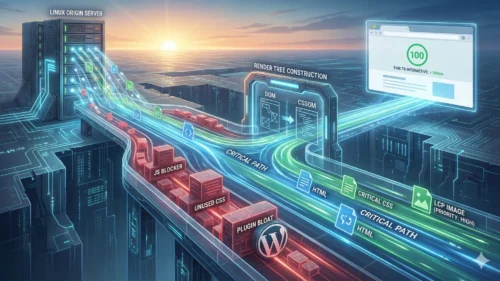
The Cult of the Green Circle: Why Your Lighthouse Score is Lying to You
An authoritative guide to critical rendering performance. We dissect the WordPress tax, tune Linux kernels, and rebuild the…
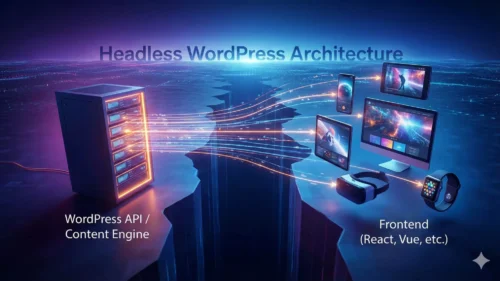
Headless WordPress represents a paradigm shift in content management where the “head” (the front-end presentation layer) is decoupled from the “body” (the back-end content management system). In a traditional WordPress setup, the software handles both the storage of content and the rendering of that content using a PHP-based theme. In a headless configuration, WordPress serves purely as an administrative interface and a data repository. Content is accessed via the WP REST API or GraphQL, allowing developers to build the front-end using modern JavaScript frameworks like React, Next.js, or Vue. This architecture offers significant advantages for high-end developers. It provides unparalleled creative freedom, as the front-end is no longer constrained by the WordPress theme engine. It also enhances security, as the public-facing site is separated from the WordPress login and database. Furthermore, it allows for true multi-channel publishing; a single WordPress instance can feed content to a website, a mobile app, and an IoT device simultaneously. However, it introduces complexity, as features like live previews and SEO plugins must be manually rebuilt or integrated via the API.
An authoritative guide to critical rendering performance. We dissect the WordPress tax, tune Linux kernels, and rebuild the…
Discover why "Technical Debt" is stalling your growth and how Headless WordPress provides the scalable, high-performance solution for…