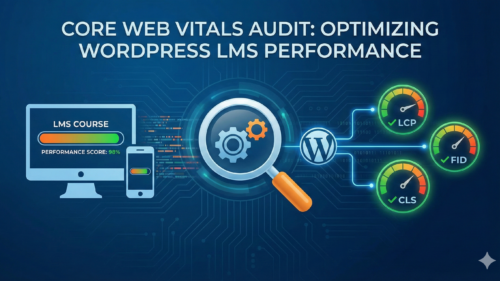
Core Web Vitals Audit: Optimizing WordPress LMS Performance
A Core Web Vitals audit for WordPress LMS involves measuring LCP (loading), CLS (stability), and INP (responsiveness). Critical…
Interaction to Next Paint (INP) is a Core Web Vital metric introduced by Google to measure a webpage’s overall responsiveness to user interactions. While older metrics focused on how fast a page initially loaded, INP measures the delay between a user taking an action—such as clicking a button, tapping a screen, or pressing a key—and the browser actually providing the next visual update (the “paint”). If your INP score is high, the site feels “mushy” or unresponsive, which is a major trigger for “Session Abandonment.”
For Niagara business owners, a poor INP score is a silent conversion killer. Imagine pressing an elevator button and waiting three seconds for it to light up; you would likely assume it is broken. The same psychology applies to your website. If a customer clicks an “Add to Cart” or “Request Quote” button and nothing happens instantly, they lose trust and often hit the back button. High-end developers optimize INP by minimizing main-thread work and reducing complex JavaScript execution that “locks up” the browser during user interactions.
In 2025, Google uses INP as a primary signal for brand quality. A “Good” score (under 200 milliseconds) indicates a technically superior architecture that respects the user’s time. By prioritizing responsiveness, you are not just checking a box for SEO; you are removing the technical friction that stands between a visitor’s intent and your business’s revenue. INP is the ultimate measurement of how well your site handles high-concurrency traffic without degrading the user experience.
A Core Web Vitals audit for WordPress LMS involves measuring LCP (loading), CLS (stability), and INP (responsiveness). Critical…
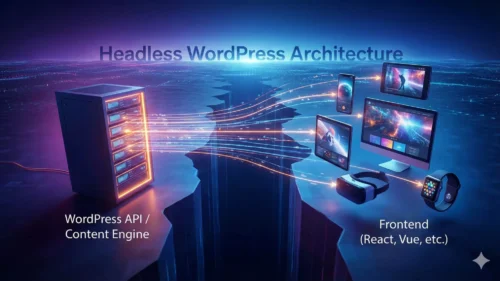
Discover why "Technical Debt" is stalling your growth and how Headless WordPress provides the scalable, high-performance solution for…